
 Christina d'souza
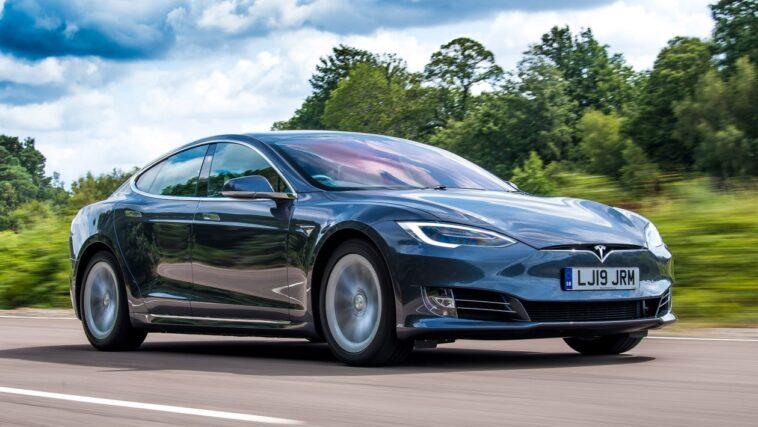
Over the years it has been more than proven that the autopilot of Tesla cars, which is actually more of an assisted pilot, does not turn out to be the most reliable platform possible in this nascent market.
Accident reports are stacked in which the vehicle’s autonomous driving system in conjunction with the driver’s negligence or the responsibility has led to more than one fatal and spectacular event.
However, year after year we have also witnessed how Elon Musk and company defend and support their developed technology in all possible ways.
Although now the company presents a new problem, a phenomenon that has already become so recurrent that it is now called phantom braking.
Tesla maybe wasn’t ready
Perhaps many do not know it, but since May 2021 the cars manufactured by Tesla have stopped incorporating proximity radars as they had been doing from the beginning.
Instead, the company incorporated a robust camera system, powered by ultrasonic sensors, and a neural network to bring Tesla Vision to life.
The platform, it is assumed, would have advanced by leaps and bounds, so much so that the company got rid of the radars to better use this system in all Tesla Model 3 and Model Y.
The detail is that as soon as they did that, the first reports of incidents began to emerge before the regulatory authority of the National Highway Traffic Safety Administration (NHTSA).
In fact, during the last quarter, there would have been about 107 complaints of this phantom braking. This represents more than triple what had been manifesting in previous months.
In this phenomenon, the same thing always happens, Tesla operates with apparent normality, the autonomous driving system is activated and the Tesla Vision cameras do not seem to have good judgment. Since they brake at unnecessary moments, they trigger proximity alarms without any need and they do not stop at the red light of the traffic light.
This last detail is what has caused the alarm of the NHTSA since the reaction to traffic lights is a mandatory requirement for these driving systems.
So Tesla has started the process to deploy a remote update of its firmware that will apply to a total of 53,822 cars.
But in the end, there is an uncomfortable background of what happened.


GIPHY App Key not set. Please check settings