
 Adam Smith
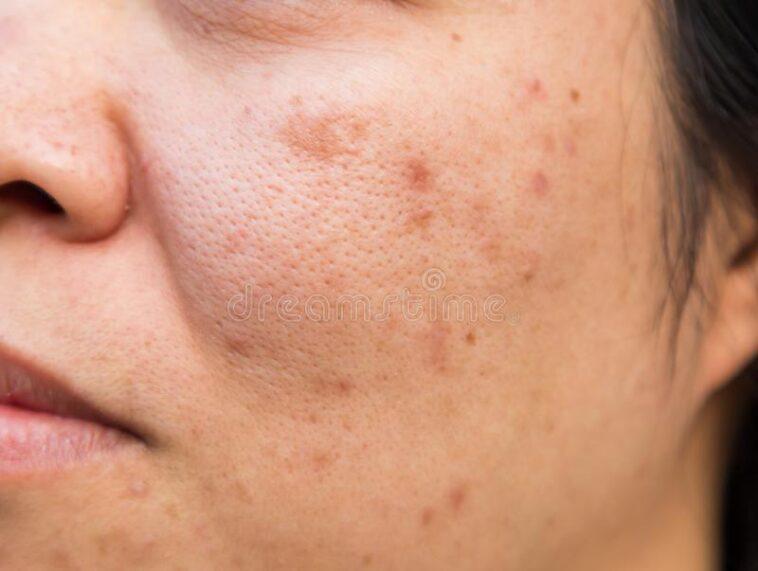
The month of January is an ideal time to go to the dermatologist’s consultation, both to eliminate brown or red spots on the skin and to consult about the new moles that we have detected.
Dermatologists recommend applying the spot treatment right now, when the sun is weakest and temperatures are at its highest.
Mole check
Before going to the consultation, it is interesting that the patient check their skin and pay attention to those new spots or moles, as well as their characteristics, following the ABCD rule proposed by the Spanish Academy of Dermatology and Venereology:
- A for asymmetry. An asymmetric mole can be suspicious.
- B for edges. If the edges of the mole are not well defined, consult a specialist.
- C for color. If the mole shows several colors, consult with the dermatologist.
- D in diameter. Moles with a diameter greater than 6 mm are also a reason for consultation.
Sun protection, also in winter
Our dermatologists recommend continuing to apply sunscreen even in winter. Although the radiation is weaker, the truth is that in Spain the sun rises almost every day of the year.
Ideally, our patients adopt a sun protection routine and maintain it over time. Today there are moisturizing creams and makeup bases that already incorporate sun protection, not to mention the wide variety of formulas and textures to respond to the different needs of each skin type.
What is the best treatment for skin blemishes?
There is no better treatment than another, it all depends on the type of stain and the characteristics of each patient’s skin. The types of spots that we treat most frequently in IML are: -Solar lentigo-Seborrheic keratosis-Melasma
- Solar lentigines are brown spots with a diameter of less than 1 cm and with very well defined edges. At IML we treat them with Q-Switched laser in 1 or 2 sessions. We can also apply Intense Pulsed Light (IPL).
- Seborrheic keratoses are similar to warts, dark brown or black in color. Our dermatologists treat them with a CO2 laser.
- Melasma is a brown patch that usually spreads across the cheeks, forehead, nose, and upper lip. It can appear due to genetic or hormonal factors and is usually worse with the sun.
IML’s Dermatology Unit constantly conducts research studies in the treatment of spots, in order to offer each patient the option that best suits their needs. Some of the most effective melasma treatments are:
- Chemical peel
- Tranexamic acid combined with laser
Tranexamic acid is infiltrated using the mesotherapy technique. For its part, the laser used can be both the 1540 Non-Ablative Laser and the Picosure Picosecond Laser.
To find out which treatment is the most suitable for you, we recommend that you make a free informative appointment with one of our Dermatologists, who will be happy to make a diagnosis and answer all your questions.


GIPHY App Key not set. Please check settings