
 Babita Soni

There is no life without cells, and each cell is much smaller than a grain of salt. They are deceptive because their outwardly basic shapes conceal the complicated chemical activity that allows them to perform their life-supporting roles.
Now more than ever, scientists have a clear mental picture of these processes at work.
You can picture biological structures either by zooming out to the organism as a whole or zooming in to the tiniest of details.

A resolution gap exists, however, between the minor structures, like the cytoskeleton that maintains the cell’s form, and the most significant structures, such as the ribosomes that manufacture proteins in cells.
Using Google Maps as an illustration, researchers have seen entire cities and individual houses. Still, they lacked the means to examine how these dwellings interacted to form neighborhoods.
Understanding the interplay between a cell’s various parts requires a view down to the neighborhood level.
The gap is slowly being closed by new tools. Cryo-electron tomography, or cryo-ET, is a technology that has the potential to improve our understanding of cellular activity in both health and illness, and its development is ongoing.

As a former Science magazine editor-in-chief and a researcher who has spent decades studying enormous, complex proteins, I have seen incredible advances in the technology used to establish their structures.
In the same way that seeing something in action helps you understand how it works, knowing how biological structures join together in a cell is essential to comprehending how organisms perform.
A brief history of microscopy
Light microscopy initially demonstrated the reality of cells in the 17th century.
The endoplasmic reticulum, a complex network of membranes essential for protein synthesis and transport, was first seen using electron microscopy, a technique developed in the 20th century that provided even better resolution than conventional light microscopy.
Biochemists spent the 1940s through the 1960s figuring out how to disassemble cells down to their molecular level and figuring out how to determine the three-dimensional structures of proteins and other macromolecules with atomic precision.
Myoglobin is a protein that transports oxygen to muscles, and its structure was first seen using X-ray crystallography.
The quantity and complexity of structures that scientists can observe have expanded dramatically over the past decade thanks to advances in techniques such as nuclear magnetic resonance, which creates images based on how atoms interact in a magnetic field, and cryo-electron microscopy.
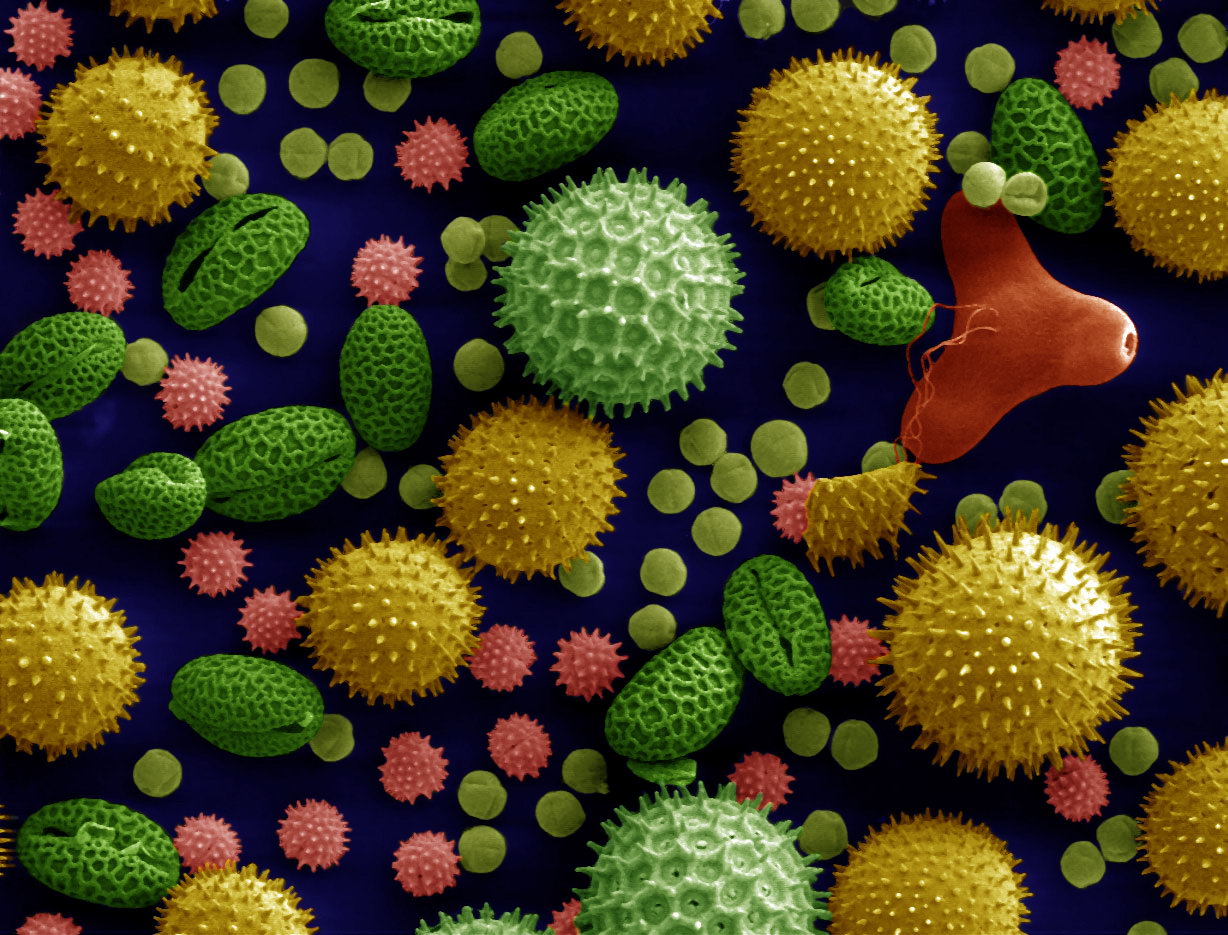
What are cryo-EM and cryo-ET?
Molecular structures can be visualized using cryo-electron microscopy (or cryo-EM), which uses a camera to detect the deflection of an electron beam as it travels through a sample.
To prevent radiation damage, samples are quickly frozen. The structure of interest is modeled in great detail by accumulating numerous pictures of individual molecules and averaging them into a 3D structure.
Cryo-ET and cryo-EM both use comparable components but distinct approaches. A region of interest in a cell is first thinned by utilizing an ion beam, as most cells are too thick to be photographed well without doing so.
Similar to a CT scan of a body part, the sample is tilted so that several photos can be taken from different angles; however, in this situation, the imaging system is tilted, not the patient. After acquiring these photos, a computer will assemble them into a 3D model of the cell.
Researchers or computer algorithms can make out distinct features of various cellular formations in this image. For instance, this method has been used to illustrate the transport and degradation of proteins within an algal cell.
Researchers can now detect new cellular structures at exponentially higher rates because of the automation of the many formerly manual stages required to determine these structures.
For instance, combining cryo-electron microscopy (EM) with AI software like AlphaFold can simplify picture interpretation by predicting the structures of proteins that have not yet been identified.
Understanding cell structure and function
Researchers will be able to approach some pressing topics in cell biology with new ways as imaging methods and procedures advance.
Identifying the cells and subcellular locations of interest is the initial step. Correlated light and electron microscopy (CLEM) is another imaging method that employs fluorescent tags to pinpoint areas within living cells where interest processes are occurring.
Protein folds, and DNA twists in a rainbow of colors.
Cryo-electron micrograph showing human T-cell leukemia virus type 1. (HTLV-1). Picture by vdvornyk / iStock / Getty Images Plus
The genetic variation between cells can be compared for further understanding. Researchers can examine the anatomy of defective cells in performing specific tasks and learn why they cannot do so.
Additionally, this method can aid researchers in investigating cell-cell communication.

For the foreseeable future, cryo-electron tomography will serve a niche market.
However, as technology improves and becomes more widely available, researchers will be able to probe the connection between cellular structure and function in unprecedented depth.
As our understanding of cells evolves, I expect to hear about new theories that describe them as tightly ordered and dynamic systems rather than chaotic bags of molecules.
The Discussion
Associate Senior Vice Chancellor for Science Strategy and Planning and Professor of Computational and Systems Biology at the University of Pittsburgh, Jeremy Berg



GIPHY App Key not set. Please check settings