
 Leena Wadia
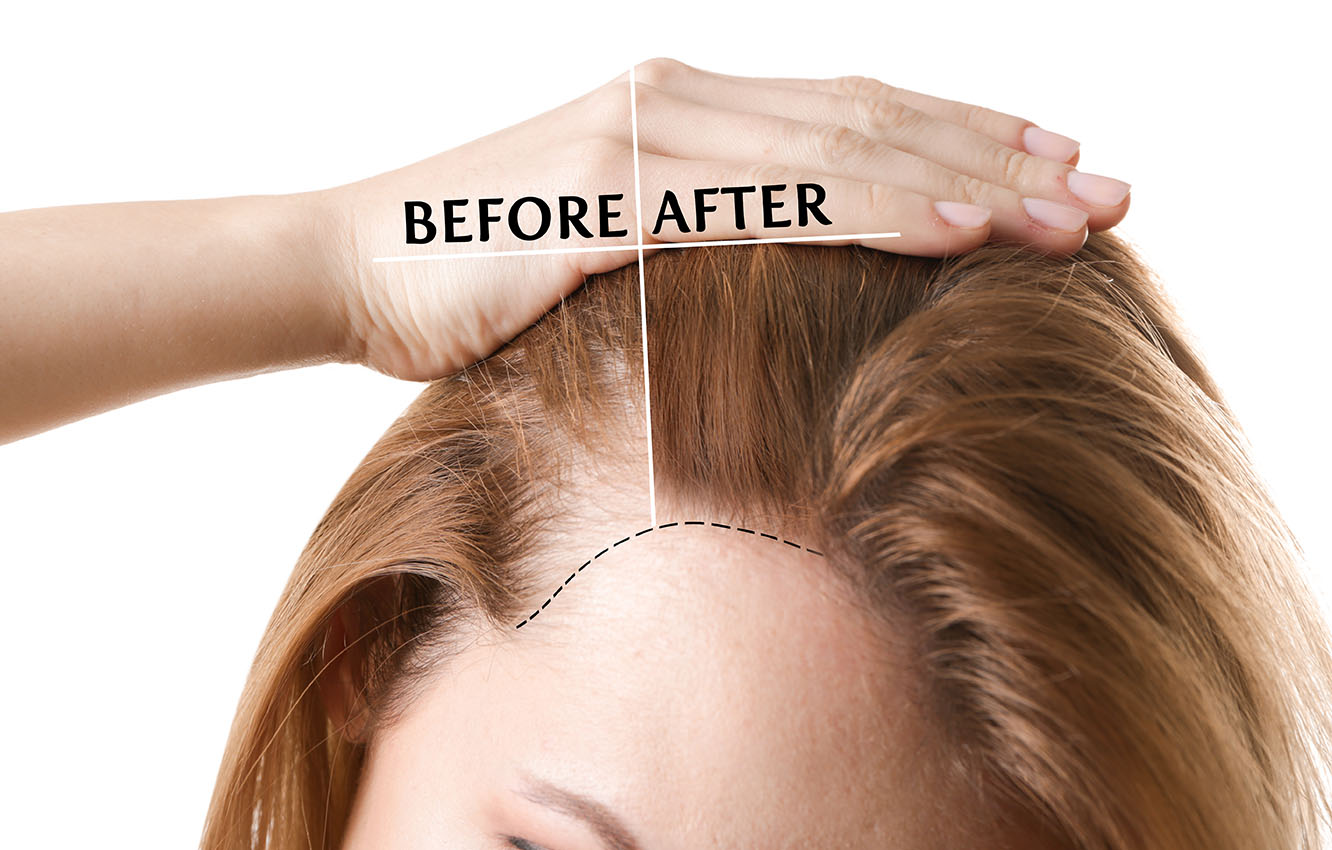
When we think of excessive hair loss, we usually associate it with men, and although for them this can be quite a stressful incident, for women it can be much more so. Scientific studies have shown that female alopecia has a much stronger psychological effect than alopecia in men.
Beyond the investment of time and money, women add a very important psychological factor to the care of their appearance, so a noticeable change such as hair loss can be truly devastating. Hair has always been seen as “the jewel in the crown” in women, so the loss of this “jewel” can seriously affect your self-esteem.
Women who lose hair usually feel that they are not taken seriously by their family and friends since the lack of hair in men (male alopecia) is often seen as something much more normal, they receive greater support from those who surround them, and they are even helped to find humor in this situation. In the case of women, this is not usually the case, although female alopecia is as normal as male alopecia, the lack of knowledge and publicity in this regard makes it seen by society as an isolated or uncommon case.
Answers given by studies carried out on women who suffer from notable hair loss, show us that its effect on them can be from mild to very severe:
- “I think about my hair loss all the time.”
- “I wish I had more hair.”
- “I’m worried about losing even more hair.”
- “I feel frustrated and lonely when I think about my hair loss.”
- “I feel self-conscious about losing my hair.”
- “I am concerned that my hair loss will affect my career/marriage/dating / sexual activity.”
- “I worry about not being attractive.”
On the other hand, men tend to face hair loss much more calmly, for this reason, women are much more prone to:
- Try to hide your hair loss.
- Discuss your hair loss with a stylist.
- Find a hairstyle that disguises your hair loss.
- Spending more time improving other physical aspects to distract attention.
Even minimal hair loss can affect a woman psychologically, so it is good that she knows who to turn to. In these cases where women are affected by their hair loss, it is good that they go to a dermatologist and they will help you:
- Discover the cause of your hair loss.
- Learn about the treatment options that exist according to the diagnosis achieved.
- Evaluate treatment options based on procedures, costs, and any other concerns.
- Begin with the agreed-upon treatment.
After consulting with her dermatologist, a woman may decide to undergo surgical treatment, so she should consult with a hair transplant specialist to determine if she is a good candidate for this procedure. In case of being a positive answer, it is always advisable to follow a surgical treatment accompanied by medical treatments for more satisfactory results.
As female alopecia is a topic that is not usually discussed during a consultation with the gynecologist or internist unless the patient mentions what is happening to her, we normally associate it with pregnancy or old age or “some hormonal change”, and we overlook it, but it should not be that way, much less take it lightly. The cause of hair loss must be studied with physical and laboratory examinations until a true diagnosis is found. Hair loss is usually due to very common causes such as hereditary female alopecia which can be treated effectively with hair transplantation or with minoxidil, which is the only drug available to treat this type of alopecia. For other causes, you should consult a dermatologist specialized in this field who knows alopecia areata or lichen planus, and in some cases, there may be another cause, which is hypothyroidism, that should be treated as part of the treatment. Fortunately, most cases can be treated with a mixture of minoxidil and surgery.
Learn a little more about female alopecia:
Types of female Alopecia
- Androgenic alopecia: is the name given to what we commonly know as male (or female) baldness. It was long thought that androgenetic alopecia was caused by the predominance of the male sex hormone, the testosterone, which women in normal conditions also have in smaller amounts. Recent studies show us that testosterone is the core of the baldness process, this hormone is converted into DHT with the help of the type II enzyme 5-alpha reductase, which occurs in the sebaceous glands of a hair follicle. DHT is the main cause of female alopecia. Scientists now believe that the problem is not the amount of testosterone, but the level of DHT in the receptors of the scalp follicles. DHT makes these follicles smaller, which makes the hair not survive. Most women with androgenic female alopecia present a diffuse weakening throughout the scalp while men on the other hand show more differentiated baldness patterns.
- Telogen effluvium: it is one of the most frequent causes of hair loss in women, it is a disorder of the biological cycle of hair, in which a large number of the hair enters the resting and falling phase (telogen) synchronously and precipitated, with this condition more than 30% of the hair enters the telogen phase (under normal conditions only 13% of the hair is telogen).
- Anagen effluvium: it is a generalized loss of hair during its growth stage, there is a strong and prolonged hair loss, between 1 and 4 weeks you can lose more than 80% of the hair that is in the anagen phase, this type of hair loss does not follow any common pattern.
- Female traction alopecia: it is a type of self-baldness caused by the continuous use of tight hairstyles that weaken the follicles, causing hair loss, if this were identified in time, the lost hair could be recovered by stopping the hairstyle that produces excessive fall. The most common hairstyles that produce this type of baldness are braids, ponytails, and extensions.
You must always remember that if you have excessive hair loss, do not despair and consult a specialist to jointly find a possible solution to your problem.


GIPHY App Key not set. Please check settings