
 Geekybar
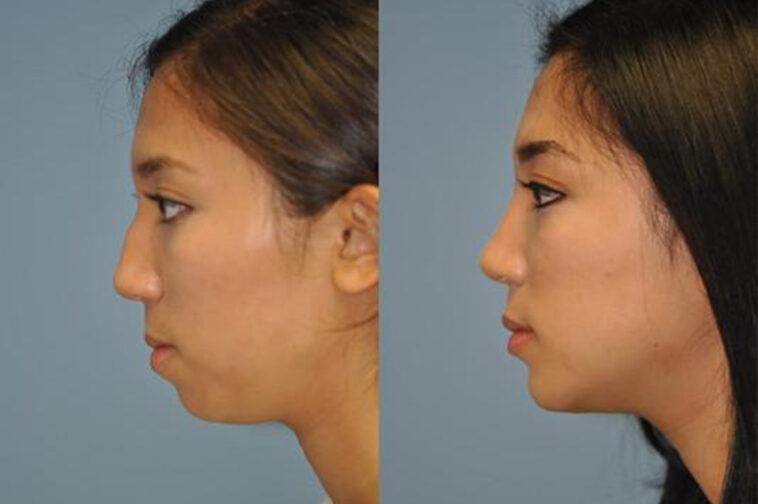
Chin Implant Surgery | What is Mentoplasty?
Chin Augmentation (Mentoplasty): Complications, Risks and Outlook
What is Chin Augmentation?
Genioplasty, mentoplasty, or chin surgery is a cosmetic surgery procedure rarely discussed but that produces significant changes in the face to harmonize it. Chin Augmentation can be done alone or with other interventions, such as rhinoplasty. There is also Profil Plast, whose objective is to correct the entire profile.
What is mentoplasty?
Chin surgery, genioplasty or mentoplasty, is a surgery with which it is possible to modify the shape or size of this area of the face. Its main objective is to ensure that facial features are proportionate as a whole. This is an intervention that is performed very often in the context of maxillofacial surgery.
The goal of genioplasty is to correct an unsightly chin that can be in different shapes:
- Backward, in this case, it is necessary to advance the chin.
- Outstanding, too far forward, and will need to be moved back.
- Too high, giving an effect of too short a face, it will be necessary to lower the chin.
- Too low, giving here a too long face effect, where it will be required to lift the chin.
- Asymmetric that will have to be refocused.
An ideal candidate is a person who does not feel satisfied with the general appearance of their face and especially their chin. There are several motivations:
- Harmonize the look by enhancing the contours of the face.
- Harmonizing the result of rhinoplasty with the chin is called profiloplasty.
- Correct double chin; the cause may be associated with an underdeveloped chin.
- Redraw the angle between the neck and the chin.
As in all cosmetic surgery procedures, an ideal patient is a healthy person who has reached the age of majority and is clear about the intervention’s benefits and risks.
The surgeons who can perform chin surgery are cosmetic surgeons, and surgeons specialized in maxillofacial surgery. This speciality treats all the pathologies of the oral cavity and the face.
To choose your surgeon, we recommend that you first research some websites to verify that your doctor is a registered surgeon specializing in cosmetic and plastic surgery.
Once you see your surgeon, feel free to read the reviews of former patients on the Internet and do extensive research to find images of their results.
Do not hesitate to make an appointment with several surgeons, and it is important that you feel comfortable and confident with the person who will operate on you.
How is the first consultation with the surgeon carried out?
In the first consultation, the doctor will analyze your motivations and expectations. It will study your case with precision and, in most cases, it will simulate the result on the computer * to help you imagine your future face. You must bear in mind that the surgeon will suggest a chin style that will harmonize with the rest of your face.
Next, the doctor will explain the different ways to proceed, the anaesthesia modalities, the possible risks, and prepare a complete budget.
Please take advantage of this first consultation to ask all your questions and ask the doctor to show you images of their results.
In most cases, your doctor will ask you to perform a preoperative evaluation and some tests before performing the procedure. You will also have an appointment with the anaesthetist at least 48 hours before surgery.
* It is important to remember that the simulations are only informative and do not necessarily constitute insurance for your future result.
How to prepare for the intervention?
You must follow the recommendations of your surgeon before performing the surgery. Do not take aspirin or derivatives for at least ten days before surgery. You should stop smoking one month before and after surgery to facilitate healing and obtain better results.
Anaesthesia and hospitalization
You must follow the recommendations of your surgeon before performing the surgery. Do not take aspirin or derivatives for at least ten days before surgery. You should stop smoking one month before and after surgery to facilitate healing and obtain better results.
The anaesthesia will depend on the type of surgery to be performed. General anaesthesia is often referred to in chin surgery with osteotomy, while genioplasty with implants can be performed under local anaesthesia with sedation.
However, if you are performing an implant placement, you can always ask your surgeon for general anaesthesia, for your comfort.
The most common is a single night’s sleep in the hospital (osteotomy genioplasty), but surgery may be done on an outpatient basis. (prosthetic genioplasty)
Intervention procedures
There are several ways to perform a mentoplasty:
- Genioplasty with implants: If the chin is back, the easiest way to perform the procedure is by placing an implant in the chin that will have an unlimited life. This intervention lasts from 30 minutes to 1 hour. There are many shapes and sizes of implants to suit the anatomy of each patient. The surgeon will first make an incision in the mouth (the scar will be invisible) or under the chin (the scar is very inconspicuous). You will then create a custom box to place the chin prosthesis and close the incision. Finally, he will put a compression bandage that you will have to keep for five days. The result is immediate. The chin is corrected and is in harmony with the rest of the face. Remember that it will be necessary to wait between 2 and 3 months before seeing the final result once oedema has completely disappeared.
- Chin osteotomy: It is an operation that lasts approximately 1 hour and 30 minutes. The surgeon will first make an incision inside the mouth (invisible scar) and then cut the chin below the teeth’ roots and move the bone fragment in the desired direction. This fragment will be fixed using screws or mini-plates (this is called osteosynthesis). Then the doctor will make stitches in the mouth that will disappear after 2 to 4 weeks. Oedema and bruising will be present for the next 15 days, which will make the results visible from that moment on.
If the chin is too prominent, the surgeon will also ream the chin’s lower edge, requiring the patient to wear a modelling bandage for about a week.
Postoperative
Whether you have had a prosthetic or osteotomy mentoplasty, it will be necessary to respect certain conditions after the operation to promote good healing. It is recommended that the patients follow a semi-liquid diet for the first few days (and avoid hot foods for the first 48 hours) and impeccable oral hygiene (special mouthwash).
Other than that, the postoperative period is quite a simple period. The patient will be able to resume a social activity between 7 and 15 days after the intervention and a soft and progressive sports activity after two months.
The patient will not feel pain but rather discomfort that tends to disappear little by little.
Whether after a prosthesis or an osteotomy, the results are directly visible, even if it usually takes three months to see the final results once the bruising and oedema disappear.
Patients are generally delighted with their intervention and feel more comfortable in their bodies.
Risks and complications
Fortunately, there are very few cases with complications. However, you must know all the possible risks before having the procedure.
General complications from general anaesthesia and those related to the surgery will be limited if you choose a licensed and competent surgeon. Other possible risks are:
- Bleeding
- Sensitivity disorders
- Lack of bone consolidation
- Dental injuries
- Fusion of the bone fragment
- Poorly tolerated implant
If there are imperfections in the results, your surgeon can easily touch them up. However, it is recommended to wait several months to do a touch-up so that the area is completely healed.
People who have a receding chin can also use less invasive or at least more straightforward techniques. These include:
- Mentoplasty with lipofilling: This technique consists of extracting the patient’s fat in a donor area before treating (Coleman technique) and reinjecting it in the chin. The injected fat can be reabsorbed up to 30% in the following months and may require retouching.
- Hyaluronic Acid Mentoplasty: In this case, the doctor injects a very cohesive hyaluronic acid to reshape the chin. The doctor can also take the opportunity to reshape the nose, performing a medical rhinoplasty. However, these injections need to be renewed every 8 to 12 months.
The says, “I generally conducted with hyaluronic acid or with hydroxyapatite and in many cases accompanying remodelled mandibular or to disguise jowls with lipolytic treatments for the same”.


GIPHY App Key not set. Please check settings