
 Leena Wadia
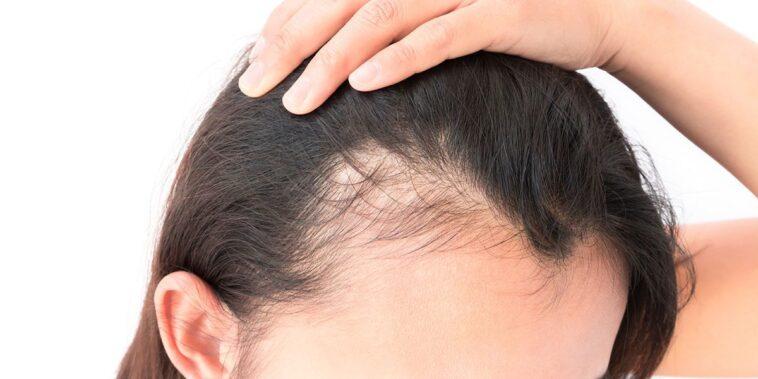
Hair loss and / or loss is a very frequent and common clinical manifestation among the general population, being this great reason for concern and consultation in our day-to-day life. In this article we will try to summarize the biology of hair, to later be able to better understand its pathologies and publicize the possible treatments.
Approximately the adult scalp has between 100,000 and 150,000 hair follicles. More than 20 different populations of cells are involved in the structure of the pilosebaceous follicle, constituting the hair follicle, the erector hair muscle, the sebaceous glands and the blood capillaries. This follicle is composed of the hair shaft, the bulge, the hair bulb and the dermal papilla.
In the lowest part, called the dermal papilla, are the cells responsible for the proliferation and growth of hair. In addition, stem cells responsible for the follicular life cycle and its growth have been identified at the level of the protrusion.
Naturally, approximately an amount of about 100 hairs / day falls . This hair loss is the normal corresponding to the growth cycle of each hair. The life cycle of the hair follicle is characterized by 3 growth periods (Anagen, Catagen and Telogen) these three phases do not occur synchronously in humans, so each follicular unit has an independent life cycle, thus avoiding massive hair loss. of hair during its shedding.
Growth phase or Anagen: 90% of the scalp hairs are in this period. The rate of growth and its duration depend on its location. On the scalp, hair grows approximately at a rate of 0.03mm / day and a total duration between 2 to 6 years.
Transition phase or catagen: During this phase, hair growth ceases and the dermal papilla presents an involution. This phase lasts for approximately 3 weeks and less than 1% of the hair follicles on the scalp are in it.
Fall phase or Telogen: Corresponds to the rest period. The hair no longer grows but remains attached to the follicle for approximately 3 months. Normally more than 10% of the hair follicles on the scalp are in this phase.
Alopecia, also known as “hair loss” is within a wide and heterogeneous group of disorders, which manifest themselves with different clinics, pathologies and etiologies. We could group them in different ways: 1- According to whether there are structural pathologies or due to hair loss itself. 2- Depending on whether they appear with a certain patchy, diffuse or other typical pattern. 3- Or if they are scar-type (inflammatory alopecia, not reversible) or non-scar.
In this article we will talk about the most common types of alopecia in both men and women:
- MOST FREQUENT TYPE OF ALOPECIA IN MAN:
The androgenetic alopecia (AGA), is the most common type of alopecia in the world. In the general population it affects more than 45% of men. It is of the non-scar type and is distinguished by progressively presenting thinning, miniaturization and loss of hair in temporal, fronto-parietal and vertex regions of the scalp (“crown”). In men, the fundamental role played by androgens, especially dihydrotestosterone (DHT), in the origin of this alopecia is well described. At the level of the dermal papilla, testosterone (TST) through the enzyme 5-α-reductase is converted into DHT, which will modify the duration of the Anagen phase, stopping the growth process. This shortening of the duration of the Anagen phase changes the appearance of the hair, being this increasingly shorter and more fragile, barely visible and depigmented, typically recognized as a miniaturization process. As more follicles go through the miniaturization process, the hair coverage progressively decreases.
Its diagnosis is made through a medical history, physical examination and a capillary study with a trichoscope. The AGA pattern is characterized by the presence in the alopecia areas of yellow dots that are related to accumulations of keratin and even more so with sebum in the hair follicle in relation to the increase in size of the sebaceous glands caused by androgen hypersensitivity dependent on its pathogenesis. The diversity of the hair diameter is characteristic in relation to the progressive miniaturization of the hair follicle and in advanced cases the pigmented honeycomb pattern related to sun exposure is observed.
- MOST FREQUENT TYPE OF ALOPECIA IN WOMEN:
The most common alopecia in women is known as Female Pattern Alopecia (APF), previously called female androgenic alopecia. It is a non-scarring alopecia and is distinguished by a miniaturization of the hair at the level of the frontal and fronto-parietal part of the scalp. Generally respecting the first line of implantation (Sinclair classification, female pattern baldness).
Female alopecia affects a total of 40% of women . (Between 2 – 12% in women between 20 – 30 years old and 55% in women after 60 years).
In Female Pattern Alopecia, unlike Male Pattern Alopecia, the action of androgens (DHT) is not clearly defined. A possible multifactorial effect is maintained, in which other factors will participate. We can distinguish them as endocrinological / metabolic factors (thyroid diseases, menopause, obesity, diabetes, dyslipidemia, etc). Stressors (emotional stress, environmental factors, nutritional factors, unhealthy lifestyles, etc). Other recognized factors to take into account are the delivery itself, surgical interventions, infections, medications, chemotherapy, etc. Each and every one of these factors generates an inflammatory phenomenon at the level of the hair follicle of the scalp, for which the miniaturization of the hair progressively occurs (thinning,
Its diagnosis is made through a medical history, physical examination, analytical study (Hemogram, iron metabolism, vitamin and mineral study, hormonal, immunological and serological study) and finally, a capillary study with a trichoscope.
- OTHER CAUSES OF ALOPECIA TO HIGHLIGHT:
Alopecia due to nutritional deficiencies (iron deficiency, extreme weight loss, protein deficits, vitamin D deficiency, vitamin B12 deficiency, folic acid deficiency, zinc deficiency, etc.).
Chemotherapy-induced alopecia (Doxorubicin, Cyclophosphamide, Docetaxel, Bleomycin, Cytarabine, 5-FU, Gemcitabine, Melphalan, Methotrexate, Vincristine, etc).
Radiotherapy-induced Alopecia.
Drug-induced Alopecia (Captopril, Enalapril, Cimetidine, Allopurinol, Colchicine, Heparins, Sintrom, Fluoxetine, Lithium, Valproic Acid, Sulfasalazine, Amiodarone, Methyldopa, Carbamazepine, etc).
Alopecia related to endocrinological disorders (Hypothyroidism, Hyperthyroidism, Diabetes Mellitus, Obesity, Metabolic Syndrome).
Alopecia associated with childbirth.
Alopecia associated with stressful processes (Surgical Interventions, Hospital Admissions, Major Psychological Stress, etc).
Alopecia due to immunological diseases (Areata, Systemic Lupus Erythematosus, Psoriasis).
Alopecia due to infectious diseases (Syphilis, Ringworm).
- TREATMENT
Regarding treatment, we should know that when one is in one of the above situations, it would be recommended to be evaluated by a specialist doctor, and thus be able to make a good diagnosis. We have different medical treatments such as PRP , Intensive Multiple Micropuncture Dermal Stimulation, Vitamins , Low Power Laser Therapy (LLLT) and pharmacological therapy ( Finasteride , Minoxidil ) and second-line surgical hair restoration treatments.



GIPHY App Key not set. Please check settings