
 Adam Smith
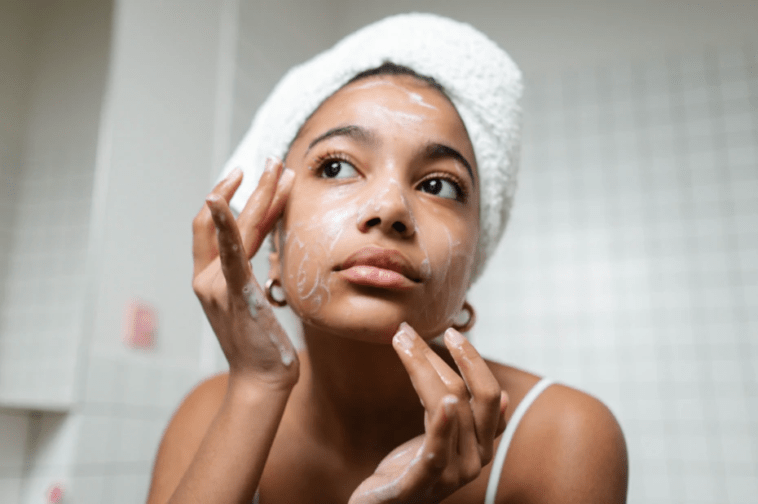
Blemishes on the skin are among the blemishes that most often cause aging and uneven skin to appear. That is why many women and men are uncomfortable with the presence of these small blemishes.
Sun exposure, cosmetics, and little attention to skin health can affect the appearance of these unsightly blemishes that they often try to cover up. But it is not always necessary to hide them under makeup, and for this reason there are numerous aesthetic treatments that allow you to remove skin blemishes once and for all.
What are skin blemishes?
Skin spots (or discoloration) are benign lesions present particularly on the face (forehead, nose, cheeks) and on the hands. Its appearance is due to some alterations in the functioning of the cells that produce melanin, especially when, as age increases, its presence begins to decrease.
These alterations cause an uneven distribution of melanin, causing the surface of the skin to create spots of beige or brown color.
Why are the spots on the skin?
The causes that determine the formation of spots on the skin are numerous. specialists explain that they appear due to internal and external factors. We detail them below:
- Internal factors: These are causes of the patient, that is, they appear due to diseases, genetics, hormonal disorders with estrogens, pregnancies, etc.
- External factors: They are due to causes that do not depend on the person, such as sun exposure and the application of products that contain alcohol among their components.
Therefore, skin aging not only depends on age, but can also be accelerated by some bad habits and external agents that stimulate free radicals and weaken the skin tissue, making it more fragile.
The types of skin blemishes
- Freckles: They are the most common type of spots, especially on the face. They are differentiated by their size and shade of brown. Generally, they appear on fair skin and it should be noted that they do not have any health risk.
- Age spots: They are called solar lentigines and appear because there is a slowdown in the functioning of cells due to aging and exposure to the sun that causes melanin to be produced irregularly. They usually appear from the age of 40 on the back of the hands, neck or face.
- Sun spots: When the face is exposed too much to UV rays, they appear as the skin turns a reddish color and becomes inflamed. They are usually so small (1 centimeter in diameter) that they can be mistaken for freckles.
- Moles: They can appear at birth, in the early stages of life or later. With the passage of time they are called mixed Nevi and later Nevus, since they become more rough.
- Cloth: It is a type of melasma that affects women in 90% of cases. It is usually a temporary melasma and after giving birth it usually disappears.
The difference between lentigos and melasmas is that the former are more superficial and typical of people with skin particularly sensitive to photoaging. Melasma, on the other hand, is found at a deeper level, in the middle dermis, and is mainly due to hormonal factors or drug sensitization. In fact, this type of spots is formed mainly in young women, in women with an irregular menstrual cycle or during pregnancy.
How to prevent the appearance of spots on the skin
One of the main factors that contribute to the formation of spots on the skin is the aging of the skin. However, just as bad habits can speed up the process, good habits can slow it down.
Some recommendations from professionals to prevent the appearance of spots are:
- Eat a diet rich in vitamins (especially A and E), fiber, and protein
- Reduce fats, sugars, and carbohydrates
- Always protect the skin from exposure to UVA and UVB rays using sunscreens with a high protection factor
- Keep the skin hydrated with specific creams.
Which specialist should I contact?
When you have any questions about the health of your skin or when you want to eliminate a skin defect, it is always advisable to consult a specialist in Dermatology . In fact, first of all, we must determine the benign nature of the spots.
you can confirm that dermatologists have the relevant titles. It is essential to have an accredited professional since otherwise, a bad diagnosis or an inadequate or poorly performed treatment can have negative and even irreversible consequences on the skin.
How is the first appointment with the specialist?
In the first consultation, the patient’s case should be assessed. The professional will review the type of stain, as well as the possible causes. According to the professionals at a personalized study is necessary, using a microcamera to see the type of hyperpigmentation.
At this first appointment, the dermatologist will ask the patient about their lifestyle , diet, exposure to the environment or circumstances that can trigger the spots. In some cases, the dermatologist will request a blood test to rule out that the spots are caused by disease.
Treatments for skin blemishes
There are mainly 4 methods to remove skin blemishes:
- Peeling: Consisting of the application of various chemical substances on the skin to produce an exfoliation of the superficial layers. This allows the uppermost layers of the epidermis to regenerate and produce new collagen. The peeling can be of three types: superficial, medium and deep. The substances used include: alpha hydroxy acids; trichloroacetic; Glycolic Acid; salicylic acid; phenol.
- Dermabrasion: This treatment bases its effectiveness on the fact that it removes the most superficial layer of the skin to give a younger appearance and smoother skin. It can be used by the doctor not only to remove blemishes on the skin, but also for scars, acne and superficial wrinkles.
- Cryotherapy: With this technique, the spots on the skin are eliminated by the action of liquid nitrogen and the drop in temperature in a controlled way (cryo means, in fact, cold).
- Laser: The wavelength emitted by the laser is absorbed by the melanic pigment. Concentrated melanin is first broken down and then eliminated through the lymphatic system. The stain is destroyed, but the epidermal tissue above is preserved and remains intact. The main lasers used are: Erbium YAG laser; ND Yag laser; Q-Switched laser; Fractional laser.
When we can see the resultes?
The results depend on the type of technique used , the starting conditions and the number of sessions. In general, the first effects will be visible as soon as a few days after the treatment.
To obtain good results, it is important to first eliminate the causes that have caused the appearance of the spots, so, for example, it will be necessary to apply sunscreen and avoid hormonal therapies.
Anti-stain treatments are not invasive. For this reason, they do not usually need a rest or recovery time that goes beyond 24 hours and with outpatient application. On the other hand, what can be prolonged are the sessions. Doctors from thendicate that with pulsed light treatment, lentigos and freckles need 2-3 sessions. On the other hand, if it is with peeling you need 3-5 sessions.

GIPHY App Key not set. Please check settings