Introduction
The obesity rate in Spain has doubled in the last 20 years. Currently, according to the latest data from the National Institute of Statistics, 36.6% exceed their ideal weight and 13.7% are obese.
A sedentary lifestyle and lack of time often lead us to adopt habits that are harmful to our health, but it is always possible to change things. When diet and physical activity are not enough to lose weight, there are many ways to help us lose weight and lead a healthy life, one option may be the gastric balloon.
What is the gastric balloon for?
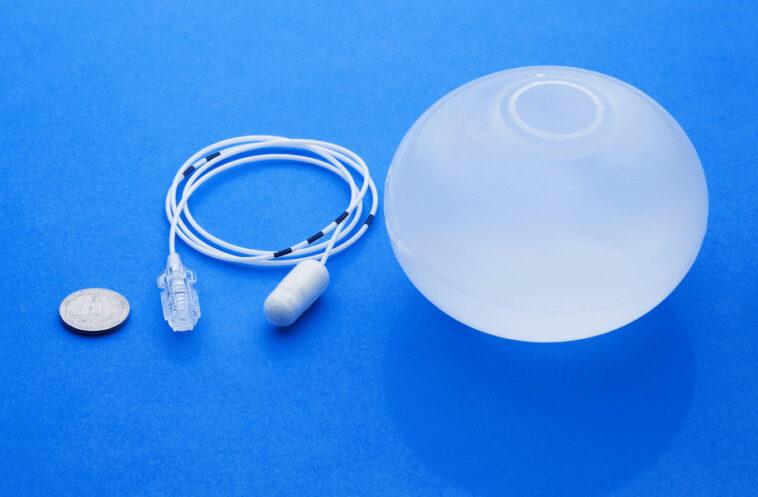
It is a silicone balloon that is placed in the stomach, to intervene in the satiety receptors and give the patient a feeling of fullness in less time, which limits food intake and causes weight loss.
Unlike other bariatric surgeries, this is a simple and quick procedure that does not leave scars and is not definitive. It has a limited duration the time since it is extracted after 6 or 12 months. According to function is to facilitate weight loss in overweight and obese people when used in conjunction with a supervised diet and behavior modification program.
Who is this technique suitable for?
The gastric balloon is designed for people who suffer from obesity and who have not managed to lose weight through a traditional technique (diet and physical activity) under the supervision of health professionals.
The minimum body mass index (BMI) that should be taken into account depends on the type of device used and the choice of the doctor who will operate it.
According to the “this technique is indicated for people who need to lose more than 10 kilos and for those patients who have failed with other diets”.
This procedure is not recommended for patients who have already had another bariatric surgery, during pregnancy, or for people with a hiatal hernia (more than 3 cm in height). Also, it is not recommended for people with bleeding disorders, psychiatric disorders, or addictions.
There are other related treatments within the treatments for obesity such as the gastric ring, the gastric sleeve, the gastric bypass, and the POSE method that can be useful depending on different factors, in the visit to the doctor he will recommend the most appropriate treatment.
How to choose my doctor?
In Spain, bariatric surgeons and gastroenterologists are the specialists who can insert a gastric balloon.
Before choosing a doctor, it is necessary to make sure that the specialist has the relevant title and is registered with one of the scientific associations in the sector, such as SECO, the Spanish Society of Obesity Surgery.
What is the first visit with the doctor like?
During the first consultation with the doctor, he will ask you questions about the motivations that drive you to want to undergo the treatment, your medical history, and your current situation, to establish a general evaluation of your state of health.
The doctor will explain how the gastric balloon placement procedure is performed and what the postoperative period will be like. In addition, they will recommend a diet to follow before and after the intervention and will detail the follow-up you will need throughout the treatment. He will also explain the pros and cons and will be able to estimate how many kilos you will be able to lose thanks to this intervention. Finally, it will also provide you with the price.
During this phase, the specialist will indicate any specialized examination (for example, blood or hormonal tests) aimed at identifying possible diseases related to overweight or obesity or risk factors and contraindications for treatment.
Take this opportunity to expose all your questions and doubts to the surgeon. In some cases, the patient may also need psychological counseling, especially if the weight is related to an eating disorder.
Typologies
There are different types of gastric balloons s, designed to meet the different needs and initial conditions of prospective patients:
- Orbera lasts for 6 months and is intended for people with a BMI between 27 and 35. It is made of silicone and the interior is filled with 500-750 cc of sterile blue saline solution.
- Orbera 355: this device lasts for 1 year and is suitable for people with a BMI between 30 and 40. It has the same characteristics as the previous one.
- Ellipse: they last only 4 months, the exterior is made of polyurethane and the interior contains 500 ccs of saline solution. It is suitable for people with a BMI between 27 and 35. It is placed without anesthesia or endoscopy and deflates after 4 months, then it is eliminated naturally through the digestive tract.
- Spatz: has a duration of 1 year and is intended for patients with a BMI between 30 and 40. It has a silicone sleeve and can be adjusted through a tube connected to the balloon, which allows for reducing its volume in case of a bad tolerance o Increasing it in case of weight loss. Initially, it is filled with 550 ccs of sterile blue saline.
- Media: lasts 6 months and is intended for patients with a BMI of 27 to 35. It is made up of outer silicone and the inner is filled with 500-700 cc of sterile blue saline.
All balloons are inserted and removed by endoscopy, except the Elipse device, which is an ingestible intragastric balloon. The saline solution that fills them is colored with a methylene blue dye for safety reasons, if the balloon were to break, the patient would immediately notice it in their urine.
How to prepare?
Your surgeon will give you all the necessary information about the preparation. You may be asked to perform various laboratory tests and evaluation tests before having surgery.
Some specialists may recommend a 4-day liquid diet to ensure that the stomach and intestine do not have food residues at the time of placement of the balloon. Generally, a 12-hour fast is recommended before the procedure.
It is advisable to stop taking anti-inflammatories and aspirin before insertion. Stimulant drinks such as tea or coffee are also not recommended as they can irritate the gastric mucosa and the patient will have a worse adaptation.
Placement
Placement is relatively straightforward and is performed under sedation with local anesthesia and on an outpatient basis (or day hospital), meaning that the patient can go home the same day. Positioning is done orally with endoscopy and the procedure lasts between 20 and 30 minutes.
Initially, the intragastric balloon is deflated and connected to a flexible tube so that it can be inserted through the mouth with an endoscope. Once placed inside the stomach, the sterile blue saline solution will be injected through a small tube and automatically sealed after the tube is removed. The camera allows the doctor to see the inflation of the balloon gradually to make sure everything is done correctly.
According to the, after the procedure, the patient remains under surveillance for 2-3 hours until he fully recovers.
Extraction
Extraction is also performed by endoscopy, under local anesthesia with sedation, and in an outpatient procedure. The withdrawal takes about 15 minutes. The doctor, with the help of an endoscopic camera, will insert a catheter to pierce the balloon and remove it through the esophagus and mouth.
Before extraction, the patient follows a liquid diet for 3 days and fasts since the previous midnight. After the extraction, the patient is monitored and will be discharged within 3 hours, the state from the
What happens after insertion?
During the first 2-3 days, the patient will have to eat only liquid or semi-liquid food, before being able to move to a gradual reintegration of solid food. The semi-liquid diet should be resumed a few days before device removal, according to your doctor’s prescription.
The liquid diet could include juices, milk, soups, broths, and jellies but coffee, carbonated drinks, fatty foods, chocolate, and ice creams should be avoided, comment from the
During the days after gastric balloon placement, some discomfort may be felt in the stomach and the patient is likely to experience nausea, bloating, diarrhea, or even cramps. It is also common for patients to vomit during the first days after insertion, but in this case, the specialist will be able to prescribe soothing medications.
After placement, it is recommended not to do any physical activity for at least 24 hours.
How is the diet after the procedure?
It is important to follow the surgeon’s advice on nutrition so that the intervention can be carried out successfully, in fact, if the intragastric balloon is not associated with an adequate diet and a change in eating habits, the patient may not lose the desired pounds. According to, “the results of the technique will depend exclusively on the correct use of the device and the diet adapted to it”
Below you will find information on the diet to follow after the placement of this device:
- In the first week: the diet must be strictly liquid. It is advisable to consume more than 2 liters of liquids a day (water, fruit juices, broths, etc …). If you want, you can use liquid meal replacements this week to maintain a constant supply of calories and nutrients. Non-alcoholic and alcoholic beverages should be avoided completely for the first week, and also for the duration of treatment in general because gas swells in the stomach and especially since alcoholic beverages and beverages have a high caloric intake that does not it is compatible with a diet.
- Second week: the stomach gradually gets used to its new size, so at this point, you can start introducing soft foods, such as purees and soups, which are always healthy, that is, they contain little fat, sugar, and few calories. It is advisable to eat slowly and chew your food well so that your brain has time to tell you that your stomach is full.
- From the third week: you can start incorporating solid foods. It is important to choose healthy foods, preferably cooked at home, and to drink plenty of water. It is not advisable to drink and eat at the same time, so it is advisable to drink at least one glass of water 30 minutes before the meal and two glasses of water 30 minutes after.
It is recommended that a nutritionist monitor you throughout the treatment to ensure you have good eating habits, which will be necessary to continue losing weight and stabilize the weight achieved once the balloon is removed from the stomach.
Some people also choose to exercise to adopt a healthier lifestyle and ease the transition to a new way of life.
Gastric balloon results
The patient’s commitment to changing lifestyle and nutrition is critical to the success of the intervention.
Specialists explain that weight loss occurs fairly quickly, but varies from case to case. In general, we can talk about a weight loss of approximately 15-20 kg in 6 months.
The patient receives medical support so that his diet is rich and without nutritional deficiencies. You have to get the patient to modify their nutritional habits to improve their quality of life, they affirm from the
According to a study reported the in the United States, in a clinical trial conducted on 255 adults with a BMI between 30 and 40 people with an intragastric balloon and control of their health, they lost 29% of their excess weight in 6 months, while the patients who received a simple dietary control lost only 14%.
Thanks to this significant weight loss, patients not only improve their physical condition but also their general health by reducing the risk of heart disease or stroke, reducing blood pressure, as well as sleep apnea, and risk of developing type 2 diabetes.
The risks
As with any operation or treatment, there can be risks with gastric balloon placement.
Immediate risks due to the procedure may include:
- Reactions to anesthesia or anesthetics
- Cramps
- Irritation of the pharynx
- Stomach or esophagus injuries
Post-procedure complications could be:
- Bowel or esophagus obstruction due to device movement
- Persistent nausea and vomiting
- Abdominal pain
- Gastroesophageal reflux
- Lesions of the mucous membrane of the stomach
Frequent questions
- Who is it suitable for? It is advisable for people with 20 or 30 extra kilos.
- How is it introduced? The endoscopist takes the deflated balloon to the stomach, then it is filled with saline until it reaches a sufficient volume to produce a permanent state of satiety. It is a quick process that takes about 20 minutes.
- How is it removed? It can be removed with endoscopy, under general anesthesia, and with intratracheal intubation to avoid aspiration pneumonia.
- How much weight can you lose? Normally, in 6 months, between 15 and 25 kilos are usually lost. During this time the patient carries the gastric balloon.
- Is lost weight regained after extraction? Those who undergo treatment must maintain a healthy diet and also exercise constantly, thus avoiding the risk of returning to the initial weight.

 Christina d'souza


GIPHY App Key not set. Please check settings