
 Christina d'souza
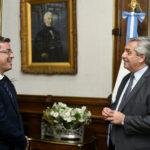
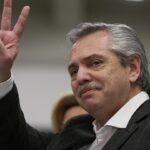
Although the measures announced by Alberto Fernández for the “war” against inflation were disappointing, there was unprecedented content in his speech: he recognized that the fight against the monetary issue is relevant to combat the rise in prices. He did it even knowing that it is something that Kirchnerism has always questioned despite the clear evidence (theoretical and practical) that points in that direction.
This statement by the President did not have the expected impact, although this may occur for various reasons. The first is that someone very weak within the government coalition affirms it, especially after La Cámpora’s decision to vote against the agreement with the IMF in Congress. Even Cristina Kirchner, who exercises the leadership of the Front of All, decided to withdraw from the Senate at the time of the vote.
Political weakness is not the only reason. In addition, hardly anyone believes at this point that the commitment to reduce emissions from 3.7% of GDP last year to 1% this year will be fulfilled. The changes in the international context due to the war will be the perfect excuse to justify non-compliance. Economists such as Diego Giacomini and Gabriel Rubinstein estimated in recent days that the issue will end up being double the official estimate.
The agreement with the IMF stipulates that there will be no price freeze, but the government insists on drawing up product lists with a commitment from the companies not to increase them for a certain period of time. These are, however, formulas that have already demonstrated their resounding failure.
The description of inflation as a “multi-causal” phenomenon, something that the IMF itself also incurred, justifies other approaches that are totally far from “orthodoxy”.
The meetings held yesterday by the Minister of Productive Development, Matías Kulfas, with representatives of food companies and supermarkets are an example of this view. There was a warning about “unjustified” price increases, there was a request to reverse the increases to return to the situation of March 8, and also warnings about the possible application of the Supply Law.
The agreement with the IMF stipulates that there will be no price freeze, but the government insists on drawing up product lists with a commitment from the companies not to increase them for a certain period of time. These are, however, formulas that have already demonstrated their resounding failure. They have been trying for years and yet inflation continues to increase.
The need to fight against “speculators” or those who seek to “take advantage” coexists almost on an equal footing with the argument that almost linearly links the issue with inflation.
Instead of lowering taxes as many countries have decided, particularly in food, the Government chose to increase them
The war incorporated a new justification for inflation, although the impact will only be felt in the March index. For this reason, the urgency of the Government to achieve some kind of reverse gear in the increases and thus soften this month’s data, which if a miracle does not occur, will be comfortably above 5%. Of course, instead of lowering taxes as many countries have decided, particularly in food, the Government chose to increase them. Thus, two percentage points were increased for exports of soy derivatives, with the justification of subsidizing the value of flour.
Alberto Fernández also spoke of the effort to increase reserves, which, as he explained, would help reduce expectations of devaluation of the official exchange rate. But even with a price that moved the bare minimum last year, inflation exceeded 50%. What the President did not say is that the exchange gap becomes a key piece of information to understand the behaviour of prices. Last year, for example, the gap above 100% was much more important than the increase in the official dollar of less than 25%, at a rate that for almost the entire year was barely 1% per month.
The IMF does not stipulate that lowering inflation is a priority either, but in the letter of understanding, it does not appear as a goal to be met but instead establishes “parameters” that range from 38% to 48%. If they are not fulfilled, the agreement does not fall and there is no punishment for Argentina. Everything indicates that a much higher level will be accepted at least implicitly this year, again using the Russian invasion of Ukraine excuse. The impact on food and energy prices is not incorporated into the agreement.

GIPHY App Key not set. Please check settings