
 Rachita Salian
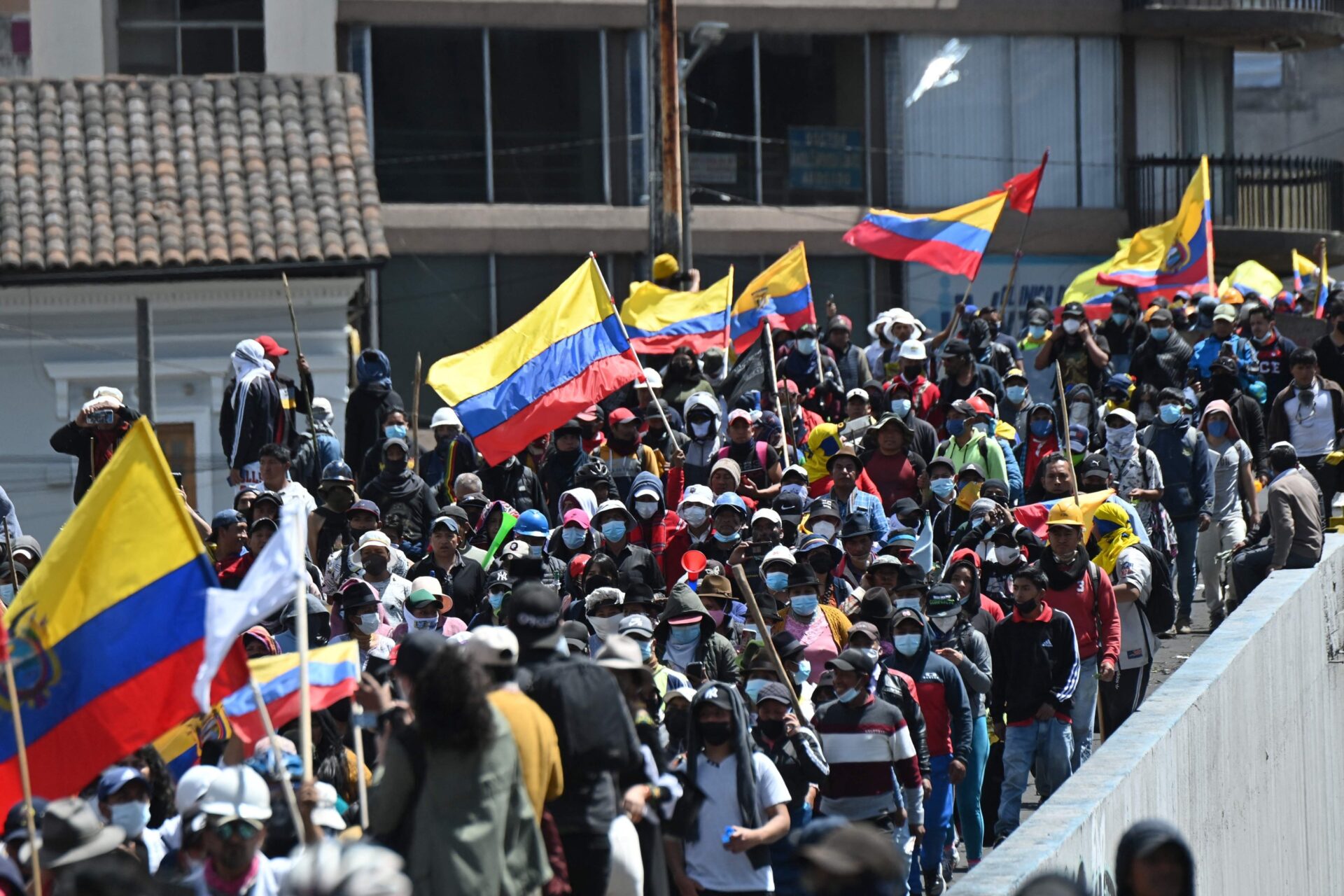
For a moment it looked as if the situation in Ecuador could ease: For almost two weeks, the country in north-western South America has been practically paralyzed by large-scale demonstrations. They started with road blockades and peaceful protests, but now violence and clashes with the police have become more frequent.
In Puyo, a small town on the edge of the Amazon, a protester died after a tear gas grenade hit him in the head, according to local reports. At the same time, demonstrators attacked a police station and patrol cars went up in flames. Interior Minister Patricio Carrillo spoke of “completely irrational acts”: “We can no longer guarantee the order in Puyo.”
Crafted shields and a variety of implements
There were also major protests in Quito. 10,000 demonstrators marched through the streets of the capital, mostly peacefully, but often armed with sticks and self-made shields. Shops had to close, and fuel and food were becoming scarce, residents report.
CONAIE, the association of indigenous nations in Ecuador, called for the protests. The powerful umbrella organization has repeatedly put pressure on various governments in the country in the past, most recently in 2019 when heavy mass protests shook the country.
The indigenous population is in distress
Just like back then, they were sparked again by diesel and petrol prices. These have risen sharply in recent years. In addition, there are the economic consequences of the pandemic: the prices for food and transport are rising, and the indigenous population in particular often suffers from poverty and unemployment.
Ecuador’s President Guillermo Lasso had promised to solve all these problems and stimulate the economy again. Lasso is strictly Catholic and conservative, a former banker, firmly rooted in the mostly white and European elite in the country.
After a year in office, however, Lasso has hardly been able to improve the situation. In addition, crime is increasing, and there have been bloody prison riots again and again in recent months. Now there are the protests.
Lasso calls on the indigenous demonstrators to end their protests. They harmed the population and caused chaos, he says. On Tuesday, the President announced that he wanted to start talks with representatives of the indigenous umbrella organization.
Protests against the abolition of emergency status
But there the first demand is for the state of emergency that the government has imposed on parts of the country to be lifted and for the military to return to its barracks.
This, in turn, now seems unacceptable to the Ecuadorian government: it is said that the state of emergency cannot be lifted, as otherwise the capital Quito would be left “unprotected”. “This is not the time to make more demands,” said Minister Francisco Jiménez, “we have to sit down and talk to each other.”
“It’s a serious threat to democracy”
It is now completely unclear how things will continue. There have long been counter-demonstrators who are publicly demanding an end to the protests and the road blockades. These prevented citizens from moving freely and going about their business, Defense Secretary Luis Lara said this week. They are therefore a “great threat to democracy” in Ecuador.
Leonidas Iza, the president of the Confederation of Indigenous Nationalities of Ecuador (CONAIE), in turn, announced that if the situation does not clear up, “rivers of people” will come to Quito to continue the protests there.



GIPHY App Key not set. Please check settings