
 Christina d'souza
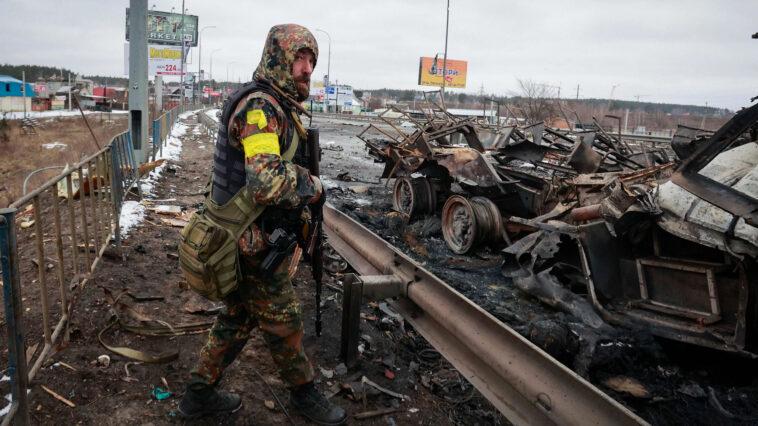
At each gust of wind, pieces of walls, pieces of furniture and glass fragments fly out and end up at the foot of what remains of the towers in the centre of Chernihiv, Ukraine, destroyed the day before by a Russian bombardment.
Staring at the ground, Sergei tries to avoid them, his bag of cat food clinging to his belly like a shield.
“There were bodies on the ground everywhere. They were waiting to enter the pharmacy here, and they are all dead,” explains this survivor, still disoriented by the constant sound of sirens, warning of an imminent attack.
Chernihiv, a key city in the north of the country, located 120 km from Kyiv and located in the path of the incursion of Russian troops towards the Ukrainian capital, resisted for seven days.
On the eighth, the Russian forces showed that it was not about increasing the pressure but about crushing the city, in images of desolation reminiscent of Grozny, in Chechnya, in 1995.
On Thursday morning, Russian planes, having taken off from neighbouring Belarus, approached with a thunderous sound.
At the height of the residential neighbourhood, where there was also a clinic, they released a shower of small devices with propellers, cluster bombs, according to an inhabitant, Serhiy Bludnyy, who collected some remains, told AFP. This coincides with the numerous images of the attack published on social networks.
The less than 10-minute bombardment of the neighbourhood, where there were still many people, and two nearby schools that served as a base for the soldiers, caused 47 deaths and constitutes one of the deadliest attacks since the start of the war, on 24 February.
“But what do these morons want?” shouts Serhiy Bludnyy, 48, as the roar of planes is heard again.
The Russian army, which has already advanced in the northeast from Sumy, wants, with the capture of Chernihiv, to unite the northern Russian offensive axis.
To conquer the city of 300,000 inhabitants, Moscow seems determined to empty it first.
On Friday morning, the last convoys of civilians left. A line of several thousand cars headed for Kyiv, with warning lights and inscriptions clearly visible on the windshields reading “CHILDREN”.
Petro Bahatyuk, 65, was unable to gather his family to leave on time. “My heart is broken, my children did not get to leave, my grandchildren are still here, and I come to look for them,” says this neighbour.
In a secret place, several local officials try to organize the survival of the last civilians.



GIPHY App Key not set. Please check settings