
 Adam Smith
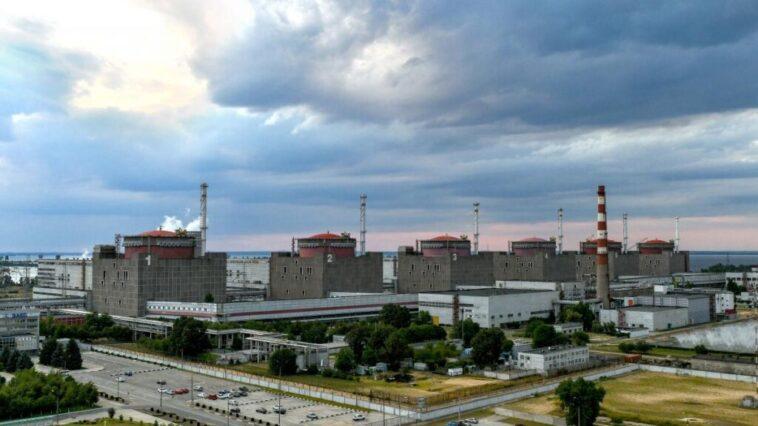
The attack did not affect any essential installation of the plant, whose nuclear security was not affected, according to the Ukrainian authorities and the International Atomic Energy Agency (IAEA).
Here are some facts about the facilities and the levels of radioactivity found in the surrounding area:
Where is the central located?
The Zaporizhzhia nuclear power plant is located in southern Ukraine on the Dnieper River, 525 kilometers from Chernobyl.
It is the largest nuclear power station in Europe, with a total capacity of nearly 6,000 megawatts, enough to supply electricity to around four million homes.
In normal times, the site produces a fifth of the country’s electricity and almost half of its nuclear energy.
Construction of the first reactor began in 1979 when Ukraine was part of the Soviet Union. Inaugurated in 1985, the plant now has six Soviet-designed VVER-1000 reactors, the last of which was commissioned in 1995.
These reactors have a lifespan of between 40 and 60 years or more with advances in technology.
What happened?
Ukrainian authorities warned on Friday that a Russian bombardment had caused a fire in a building dedicated to training and in a laboratory.
After several hours of uncertainty, the scene was secured and the reactors were “safely shut down”, according to US officials. The fire, which caused no casualties, was extinguished by Ukrainian firefighters at 6:20 a.m. (4:20 a.m. GMT).
How does the central work?
The design of these pressurized water reactors, considered to be among the safest, comes from those fitted to nuclear submarines and differs from those of Chernobyl, moderate to graphite and initially designed to produce plutonium and not electricity.
The power plants at Balakovo, on the Volga in southern Russia, and Kozloduy, on the Danube in Bulgaria, have similar technology.
The Zaporizhzhia VVER-1000s are powered by fuel enriched in the fissile isotope Uranium-235.
They operate using steam heated by the core, but unlike other reactors, the nuclear-contaminated steam is not used to turn the turbines, but to heat another circuit of uncontaminated steam which then turns the turbines.
This technique makes it possible to maintain a relatively low level of radioactivity for the employees of the plant.
What are the levels of radioactivity?
Background radiation around the site was 0.1 microsievert per hour on Friday morning, according to the plant operator, below the global average and well below that from an airplane flight or an X-ray.
During the Chernobyl disaster, the level of radioactivity was millions of times higher, at 300 sieverts per hour.
After the Russian military operation against Ukraine in 2014, Kyiv developed safety protocols for the physical protection of nuclear facilities in the country, with regular inspections, vulnerability assessment, and implementation of automated control systems.
Air defense has also been reinforced over Zaporizhzhia.


GIPHY App Key not set. Please check settings