
 Leena Wadia
What is blepharoplasty? – Techniques, results, complications & FAQs
Eyelift surgery | Blepharoplasty
Blepharoplasty: techniques, side effects, result, risks & FAQs
Introduction
Blepharoplasty aims to correct bags or excess skin on the upper or lower eyelids. In some cases, it is an aesthetic issue, but in others, it can affect vision.
What is blepharoplasty?
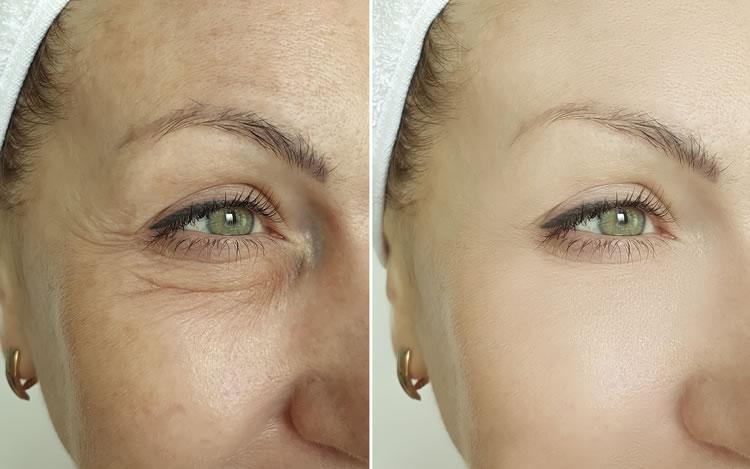
It is a surgery that manages to eliminate excess skin and drooping eyelids, eye bags, and dark circles depending on the case and each patient’s need. Its objective is to restore vitality and eliminate the effect of fatigue, rejuvenating the look.
According to a statement, it is not a surgery to eliminate crow’s feet or wrinkles; It is also not done to lift the eyebrows, but it can be done in conjunction with other surgeries to achieve the desired rejuvenating effect. Eyelid surgery corrects:
- Excess skin
- Leftover fat from the eyelids
- The tired appearance
- Bags and dark circles
An article on non-surgical blepharoplasty published on the National Institutes of Health website states that ” the eyes are an important component of facial aesthetics . They are at the center of an anatomical area of the face that is very important for rejuvenation procedures, known as “periorbital region.” The appearance of the eyes, therefore, decisively influences the perception of aesthetics and facial ageing.
For a specialist in this surgery, it is much more than that, “The goal is to achieve a more youthful and relaxed look but above all that the result is very natural, without ceasing to be yourself. The effect has to be as if we had gone back in time about 5-10 years. The changes must be so subtle and natural that they do not alter the patient’s expression”.
How do I know if I am a candidate?
It is a surgery that manages to eliminate excess skin and drooping eyelids, eye bags, and dark circles depending on the case and each patient’s need. Its objective is to restore vitality and eliminate the effect of fatigue, rejuvenating the look.
According to a statement, it is not a surgery to eliminate crow’s feet or wrinkles; It is also not done to lift the eyebrows, but it can be done in conjunction with other surgeries to achieve the desired rejuvenating effect. Eyelid surgery corrects:
- Excess skin
- Leftover fat from the eyelids
- The tired appearance
- Bags and dark circles
An article on non-surgical blepharoplasty published on the National Institutes of Health website states that ” the eyes are an important component of facial aesthetics . They are at the center of an anatomical area of the face that is very important for rejuvenation procedures, known as “periorbital region.” The appearance of the eyes, therefore, decisively influences the perception of aesthetics and facial ageing.
For a specialist in this surgery, it is much more than that, “The goal is to achieve a more youthful and relaxed look but above all that the result is very natural, without ceasing to be yourself. The effect has to be as if we had gone back in time about 5-10 years. The changes must be so subtle and natural that they do not alter the patient’s expression”.
How do I choose my surgeon?
In addition to checking the surgeon’s studies, the level of subspecialty is important. The specialist in Oculoplastic Surgery is the right professional to perform Blepharoplasty.
The oculoplastic surgeon is an ophthalmologist trained and specialized in surgery. Not all ophthalmologists must perform eyelid surgery, and they have to be accredited. According to a statement, if an accredited Oculoplastic professional performs this surgery, it does not offer major complications and does not leave visible marks. It is one of the most requested aesthetic interventions, especially in men.
What is the first appointment with the surgeon like?
In the first appointment, you will talk about the results you want to achieve, and a health evaluation will be made, as well as for the vision and production of tears. It is important to take a complete medical history, mentioning if you take any medication, smoke, or drink. If you wear glasses or contact lenses, if possible, take the last ophthalmological exam.
At the appointment, it will be reviewed if it is necessary to operate on the upper and lower eyelids or if it should be complemented with some other treatment or procedure. The procedure, how it is performed, anaesthesia, risks, postoperative care, and the cost will be explained. It is important to clarify all doubts with the surgeon. According to a surgeon, “The main thing is to be realistic with expectations, each person is individual and there is no standard shape of the eyes. If what is sought is to improve the tired appearance or recover the freshness of the look, it will be able to fulfill Your expectations”.
Also, the surgeon will give you instructions to prepare for surgery, what foods to eat, and instructions on the intake of tobacco, alcohol, or any medication. It is essential to stop smoking at least two weeks before surgery to help the healing process.
How it is performed?
his surgery must be done in an operating room. It is an outpatient surgery, so generally, you can go home after a few hours of observation. It is performed under local anesthesia plus sedation, in some cases under general anaesthesia, but it is a preference of the surgeon or the patient. As mentioned above, the patient feels relaxed in the first case, as the eyelids become insensitive to any pain. In the second case, the patient remains asleep during the operation.
In upper eyelid blepharoplasty, the incision is hidden in a natural groove in the skin, in the eyelid crease itself. It is closed with very fine stitches barely visible to the naked eye.
In the lower eyelids (lower blepharoplasty), the incision is made inside the eyelid, thus avoiding the external scar and giving stitches. Excess fat is located and eliminated or repositioned. It is often necessary to remove the skin in traditional surgery if we associate a canthopexy and never in laser-assisted blepharoplasty.
Eyelid surgery lasts between 1 to 3 hours, and it is longer if some other complementary procedure is performed. An ophthalmic ointment and very cold saline dressings are applied to help with swelling and possible discomfort after surgery. Patients can return to normal life 10-12 days after surgery.
According to, although it depends on the type of work, the usual thing is that patients can return to their normal life 10-12 days after surgery in the case of traditional surgery, while in the case of laser blepharoplasty, the recovery time is shorter, about seven days, as there is less inflammation and bruising.
The incisions are hardly noticeable since they are made on the natural lines of the upper eyelids and the lower eyelids under the lashes. With these incisions, it is possible to separate the skin from the fat, the muscle, and thus be able to extract the excess fat. In some cases, excess skin and muscle are removed. The incisions are closed with very fine sutures.
The usual thing is to perform a transconjunctival blepharoplasty of the lower eyelids. With this technique, the incision is made inside the eyelid; therefore, there is no visible scar. This surgery is not performed if excess skin also needs to be removed. Moreover, the cut heals in 3 to 4 days.
Blepharoplasty techniques
For excess skin on the eyelids, bags, dark circles, and wrinkles around the eyes, there are multiple techniques to rejuvenate the gaze, each with its indications and limitations. The terminology used is often misleading. According to blepharoplasty, by definition, it is the surgical treatment to correct these defects, and the two surgical blepharoplasty techniques are distinguished below :
- The classic blepharoplasty- It is done with a traditional scalpel called a cold scalpel, aided by electrocautery, also called an electric scalpel.
- The blepharoplasty laser- Co2 laser is commonly used in a surgical mode for the excision of skin and fat. It is complemented by fractionally applying the same CO2 laser on the skin around the eyes for its renewal or resurfacing.
It is now common to speak of “blepharoplasty without surgery,” although it is not an academically correct term. It would correspond to the group of medical treatments or techniques without surgery to rejuvenate and give a fresher air to the look. We can distinguish two subgroups of “blepharoplasty without surgery” techniques :
- Non-surgical techniques with different equipment such as Co2 lasers, Erbium, etc., plasma (which is not laser), radiofrequency, etc.
- Injectable techniques: Hyaluronic infiltrations and other products, Botulinum toxin type A, PRP or growth factors, CO2 gas, etc.
Blepharoplasty techniques without surgery
Laser blepharoplasty: It has the same objective as the traditional one and is performed under local anaesthesia plus sedation. The difference is that instead of making the incisions with the scalpel, they are made with a laser beam, usually a CO2 laser. The advantage of using a laser is that it cauterizes the blood vessels while the cut is being made, thus minimizing blood loss during surgery. Once the cut is made, the surgeon removes the excess fat, skin, muscle, and tissue and then suture. Another benefit of the CO2 laser in blepharoplasty is that it can correct the inner eyelid’s wrinkles through resurfacing.
- Regarding recovery, scars are avoided, and pain, inflammation, and bruising are reduced. Also, the process is shorter than that of traditional surgery. When performed with a laser, the discomfort caused by swelling or bruising is really minimal when compared to traditional eyelid surgery.
- Radiofrequency blepharoplasty: This is another nonsurgical technique that uses radiofrequency equipment to tighten the skin and stimulate collagen production. There are multiple radio frequency equipment and a great diversity of prices, results, and a number of sessions required.
- Plasma blepharoplasty: In this case, we work with a team that generates plasma. They are not laser equipment, but due to ignorance or misleading commercial strategy, let’s see what they call plasma-laser, plasma laser, laser-Plexr, and even laser blepharoplasty. As these devices are also called the plasma pen or plasma pencil, they can retract the skin in incipient cases.
- Blepharoplasty with injectable products: hyaluronic acid and others are used to tighten and raise the eyebrow, smooth wrinkles, improve dark circles, etc. Botulinum toxin type A, PRP or growth factors, CO2 gas, etc, are also used to rejuvenate the skin.
Combined techniques
- Blepharoplasty with lipofilling: it is traditional eyelid surgery, but also, dark circles are eliminated with lipofilling, that is, with your fat. It is also used to eliminate nasolabial folds and fine lines such as frown lines and crow’s feet. It provides a more satisfactory overall result as it rejuvenates other areas and not just the look.
- Canthopexy: in addition to rejuvenating the gaze, canthopexy serves to tear the eyes, which changes the eye’s shape and gaze.
- Blepharoplasty with Nano fat: It is performed to improve the colour of dark circles and their appearance. Nano fat is a combination of the patient’s fat with stem cells and growth factors, which helps heal the area and eliminate wrinkles.
How is the recovery?
After surgery, an ointment is applied to lubricate the eyes and sometimes a bandage. In case of discomfort, the surgeon will prescribe medications. If, on the other hand, there is very acute pain, you must immediately contact the professional. Keep your head elevated for a few days after surgery, and apply cold compresses.
It is important to follow the directions to wash your eyes properly. You also have to respect the way you apply eye drops to keep your eyes hydrated. If it is a blepharoplasty with points, these are removed between the second and seventh days. The recommends the following care guidelines:
- Do not make intense physical efforts during the first week, such as gaining weight or doing sports intensively.
- Apply cold on the eyelids to avoid swelling in the times indicated by the specialist.
- Use the antibiotics and anti-inflammatories indicated to prevent the discomfort caused by the intervention.
- Do not rub your eyes for at least the first 72 hours.
- Maintain elevated head posture.
- Clean the eyelashes with physiological saline and place them with the help of an ear stick.
- Do not use contact lenses or makeup in the eye area for the first two weeks.
- Protect yourself from the sun with suitable glasses, which prevent the sun’s rays from hitting your eyes.
During the first weeks, you may notice excessive tearing, hypersensitivity to light, a change in visual acuity such as double or blurred vision (which remits after a short time). But they will disappear with the days. After two weeks, you will be without any side effects.
Results
In the case of traditional blepharoplasty, the scars may be pink for a few months, and then they will disappear and change colour until they are almost imperceptible. Eyelid surgery provides a more youthful appearance, without fatigue and these changes are permanent in most cases. Eyelid surgery cannot stop natural ageing, so it does not have a specific duration. It does allow the facial appearance to be rejuvenated immediately, but its duration does not have a deadline.
Complications or possible side effects
According to an ophthalmologist specializing in Oculoplastics, although it is very safe surgery, like all procedures, it is not without risks. There are currently minimally invasive surgical techniques, but the intervention’s importance should not be trivialized. It is important to choose a good surgeon to avoid any complications as much as possible. The minor complications that appear and disappear in a few days are inflammation of the upper eyelids and bruises. They are minimal in laser blepharoplasty compared to the traditional one. The scar soon goes unnoticed. The risk of infection is minimally present.
The eye’s proximity makes eyelid surgery, and any procedure around the eye requires great expertise and experience. Complications are avoided by choosing a good professional. If your surgeon is an ophthalmologist, he will know better than anyone how to prevent or treat possible ocular complications that may arise, such as dry eye problems., which is common after surgery, and others such as malpositions of the palpebral edge (ectropion, entropion) and lagophthalmos. It consists of the difficulty to close the eyes completely at bedtime so that part of the cornea is left without eyelid protection and becomes irritated. Usually, it is temporary, but sometimes it is permanent if more skin and muscle has been removed than it should. It is a major problem that requires a surgical solution.
Frequent asked questions
- Is it also used to correct crow’s feet? According to a statement, with blepharoplasty, crow’s feet are not corrected, although they can sometimes be moderately softened. Surgical techniques that seek to eliminate crow’s feet are very aggressive and radical, sometimes leaving expressions that are too frozen in the look To improve crow’s feet, the ideal is to resort to treatments with botulinum toxin injections, an almost immediate result and without having to undergo surgery.
- Could the patient’s facial expression change? The mimicry’s musculature gives the facial expression a blepharoplasty we do not alter. Our goal is to eliminate excess skin and periocular fat and not intervene in its muscular functioning so that a priori facial expression does not change. It is possible to observe an aesthetic change in the orbital frame, a clearer, more open, and rejuvenated look, with less fatigue expression.
- Are the scars to be seen? The incision for the upper blepharoplasty is perfectly camouflaged as it takes advantage of the natural crease in the eyelid. It usually goes unnoticed unless the patient has a tendency to the appearance of keloids or hypertrophic scars.
- Can vision be affected after the procedure? One of the reasons this intervention is carried out is that the upper eyelid’s excess skin decreases the patient’s visual field. With the intervention, we would improve that field of vision. The patient may have ocular discomfort such as burning, dryness, or hypersensitivity to light. For this reason, special washing techniques and sun protection with the use of large sunglasses are recommended.
- Is it possible to perform eyelid surgery if I have an eye disease? In the most common cases, such as retinal detachment or glaucoma, if they are controlled, there is no contraindication since we do not act on the eyeball.
- Are my eyes very dry after surgery? Ocular dryness after eyelid surgery is common and tends to be transitory. It is more frequent when there was previous dryness or poor tear quality or when inferior myocutaneous flap techniques or excessive resections are used.
- Is there a lot of swelling and bruising? The eyelid is a very lax structure, and although the aggression is minimal, it tends to become inflamed during the first three days to gradually subside from the fourth day. Bruises depend on bleeding and vary from a few people to others. If the work is for the public, the convalescence time will be given by the time it takes for your skin to reabsorb this hematoma. With the laser blepharoplasty technique, the inflammation and bruising are minimal compared to the traditional one, so the payback period is shorter.
- How long will it take to wear contact lenses after the operation? If it is a blepharoplasty of the upper eyelids, you can probably carry them out after the first week. If it is of the lower eyelids, you will have to wait two weeks since the cut is usually made inside the lower eyelid.
- Will I have to have my eyes covered after the operation? The patient leaves the clinic and uncovered the eyes, and most can read from the next day without a problem. At best, you’ll notice some dry eye that deals with a moisturizing eye drop.


GIPHY App Key not set. Please check settings