russia heli
Russia’s military might is vastly superior to Ukraine’s. Both nations are involved in an unfortunate war that began in the early hours of Thursday, March 24. It takes place in the border areas and on the outskirts of the Ukrainian capital, Kyiv.
Not 48 hours have passed since the first shot occurred and Russia has already demonstrated part of its impressive arsenal that goes beyond the range of a bullet, the destruction caused by one of its missiles or the protective metal used by soldiers’ vehicles.
The Russian military has amazing technology to protect its aircraft, which is executed while they are in flight. The world was shocked about nine months ago when Israel protected its territory from missiles coming from Palestine by activating its shields in the skies over Tel-Aviv.
Well, what goes into Russia’s helicopters and low-flying planes is similar technology. The big difference with respect to the Israelites is that they go on each of the aircraft. So when the pilot receives the alert that a missile is headed for his ship, he applies these defences to defuse the threat.
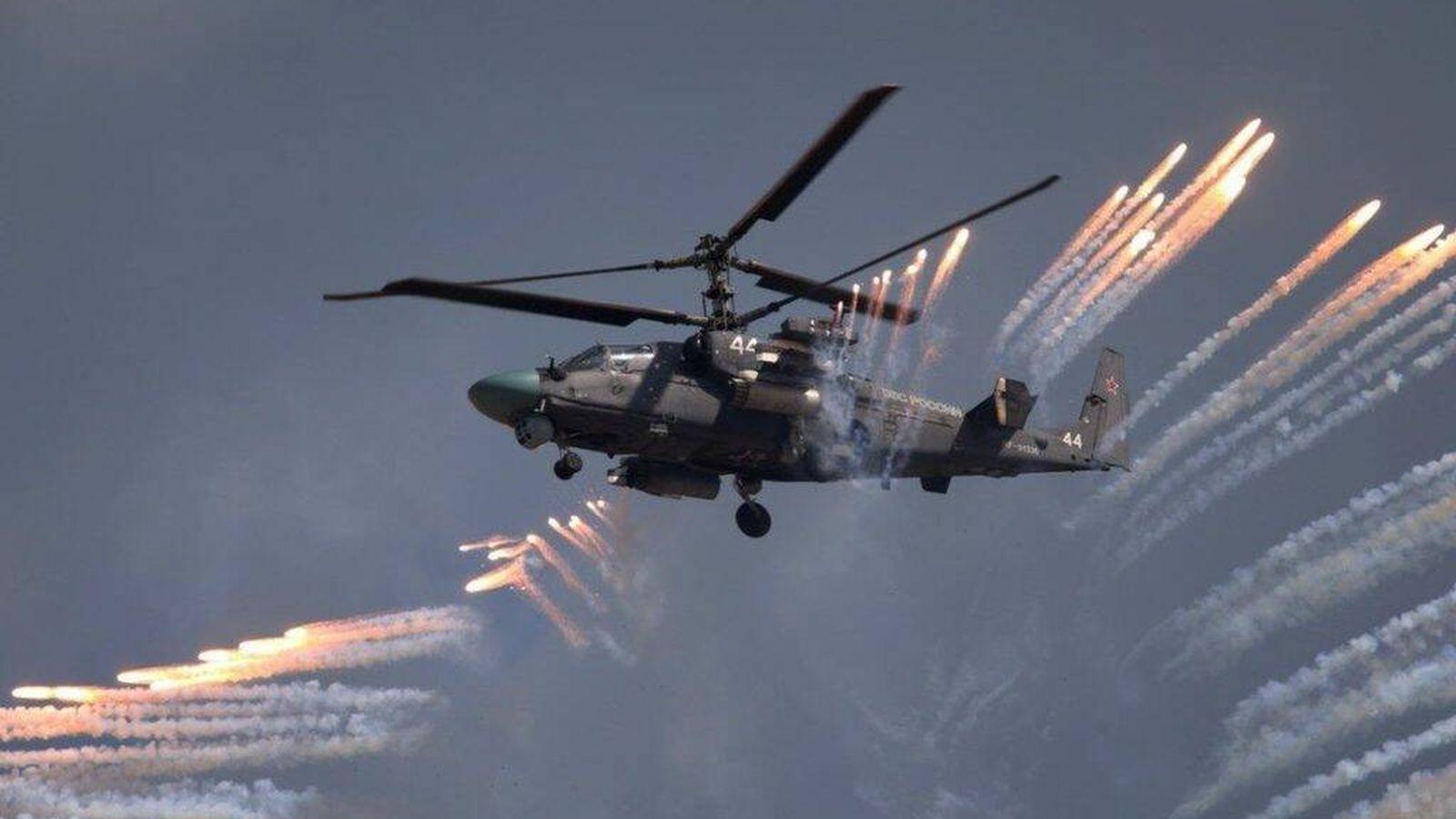
The photograph that we share on the cover of this review, courtesy of El Confidencial, is precise of a helicopter executing the defence systems. In social networks we have found videos of alleged Russian aircraft in Ukraine, shooting these same flares that protect.
We cannot confirm that this video that we post below is from the current conflict between Russia and Ukraine. But we share it with you since what is certain is that it is activating the defences while flying through a residential territory.
El Confidencial explains that this system consists of generating a high sensation of temperature. The action would throw off the missile’s seeker as it chases the same heat emitted by aircraft or helicopter turbines.
Once the pilot who is defending himself fires these extremely hot flares, he must execute a quick manoeuvre away from the place, to detach himself from the decoys and of course from the missile.
The same thing happens in the event that the defences are programmed automatically. The radars detect an approach and immediately release the decoys. For this reason, the maneuverer himself must move away from this location.
Something very common is what happens in the Twitter video that we leave above: a helicopter is flying over an area without threats but is hostile. Then, as it makes its way around, it drops decoys in case a homing missile is fired at it.
Creating a completely different series based on a universe that knows half the world can't… Read More
The strikes of scriptwriters and actors have put in check the constant flow of content to… Read More
Money Heist has returned to Netflix. This time as a prequel to the original series… Read More
One of the 50 best war films in cinema history turns 25 years old. And it is not… Read More
What is the singapore kiss In short, it is about emulating during intercourse, through the… Read More
Regarding patents, Sony is one of the technology companies that has carried out the most registrations in… Read More

