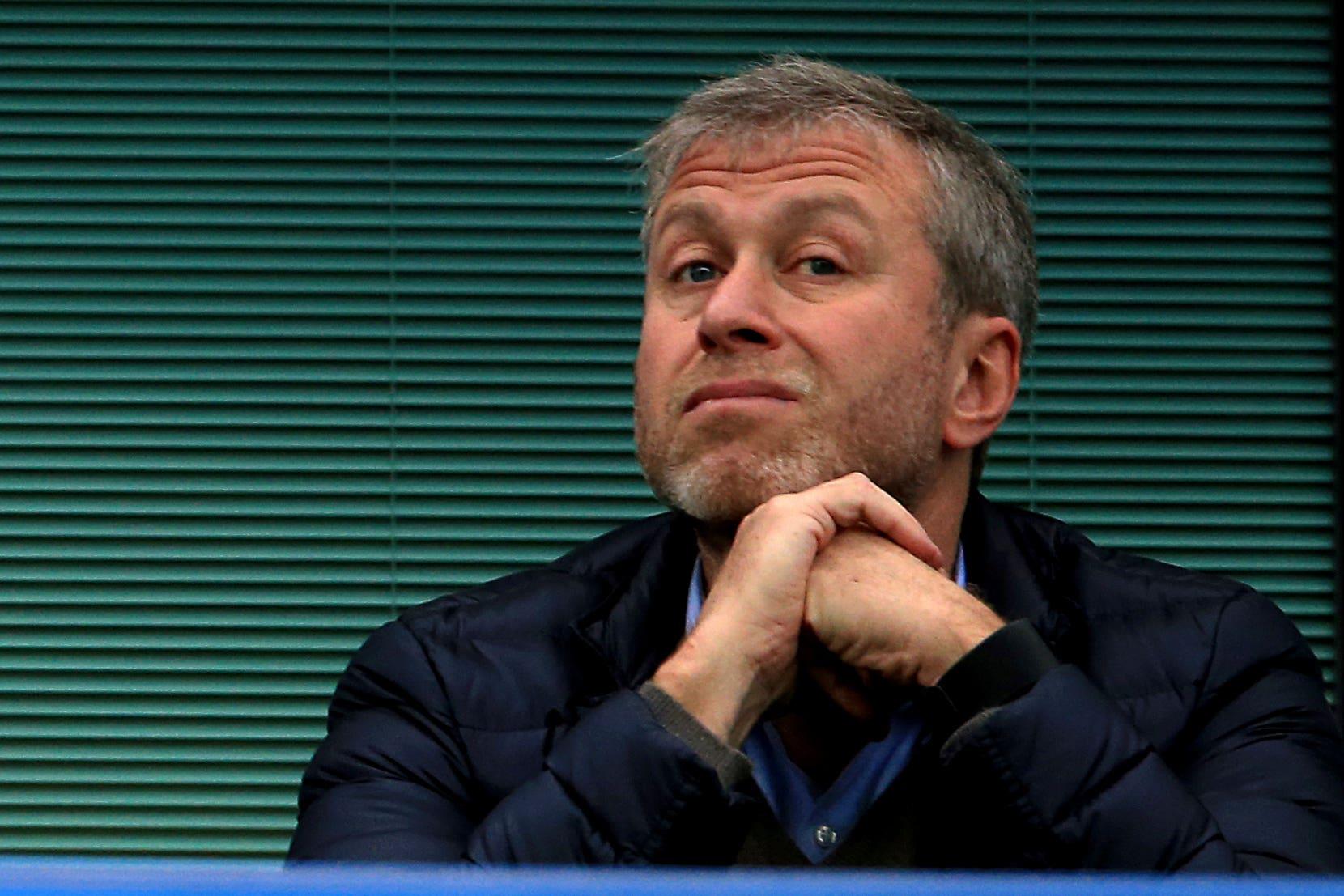
Roman Abramovich and two Ukrainian negotiators suffered symptoms of poisoning after a meeting with Russian delegates
Russian tycoon Roman Abramovich, who has participated in meetings of the negotiations between Ukraine and Russia, has suffered symptoms of possible poisoning, the same ones that have affected two negotiators in Kyiv, according to sources close to the matter.
The former owner of the Chelsea club, who was in Moscow, Kyiv, Lviv and other cities where the dialogue is taking place, developed “ symptoms that included red eyes, constant and painful tearing, and peeling of the skin on their faces and hands. ”, sources told the Wall Street Journal.
Those close to him blamed the questionable attack on the hard-line sectors of the Kremlin that, supposedly, were trying to sabotage the talks that seek to stop the war. Another source close to the businessman said it was not clear who was behind the alleged attack.
The Wall Street Journal reported that Abramovich and the Ukrainian negotiators have improved since they began to show symptoms and are not in danger. In addition, they indicated that Volodymyr Zelenskyy, who has met with the businessman, has not been affected.
At the moment it has not been possible to determine if there was any chemical or biological agent that caused the disorders.
In turn, the Bellingcat research site indicated that its sources also confirmed the symptoms, recorded in early March. “Three members of the negotiating team retired to an apartment in kyiv that same night and felt the first symptoms – inflammation of the eyes and skin and stinging pain in the eyes – that same night. The symptoms did not subside until the morning, ”they explained.
According to experts consulted at the time, “ the symptoms are most likely the result of international poisoning with an undefined chemical weapon ”, the portal stated, while a less likely alternative hypothesis was the use of microwave irradiation.
Bellingcat added that the symptoms “gradually subsided over the course of the following week.”
The most recent case of the poisoning of an enemy of the Kremlin was that of the opposition leader Alexei Navalny, who was on the verge of death and received treatment in Berlin. But there is a long history of chemical or other harmful substance attacks linked to Russian intelligence.
In September 2018, the target of an attack was Pyotr Verzilov, an artist, blog editor and member of the activist group Pussy Riot, who ended up in an intensive care unit and was also flown to Berlin for treatment. According to the Meduza portal, “a powerful neurotransmitter blocker is what apparently left Pyotr Verzilov in critical condition.” His family said they are “1,000% certain” that he did not take anticholinergic medications by his will.
A few months earlier, in March 2018, another case occurred that went around the world. Former Russian double agent Sergei Skripal, 66, was found dying on a bench in Salisbury, UK, along with his 33-year-old daughter Yulia. Toxicological studies found that both had traces of novichok, a powerful nerve agent developed in the 1970s by the Soviet Union. Both he and his daughter battled for several weeks for their health but were able to survive.
Activist Vladimir Kara-Murza, a journalist and opponent of the Kremlin, suffered not one but two alleged attacks. After making multiple complaints against ruling figures at the Open Russia Foundation, Kara-Murza fell into a coma in 2015 with multiple vital organ failures. He required respiratory assistance and dialysis but survived. Two years later, he claimed that he suffered a second poisoning that left him hospitalized for several months, first in Russia and then in the United States, where he received blood transfusions.
One of the most resonant cases occurred in 2006 when former KGB colonel Alexander Litvinenko was poisoned in London with the isotope polonium 210. British judge Robert Owen estimated that Putin “probably approved” a secret service plan, now called the FSB, to kill his vocal detractor. In November of that year, the former Russian spy, openly opposed to Putin, died at the age of 43 in a London hospital. Three weeks earlier, this former secret service man had had tea with another former Russian agent, Andrei Lugovoi. His death caused a diplomatic crisis between London and Moscow, which always refused to extradite the main suspect.
Investigative journalist Anna Politkovskaya, a critic of abuses in Chechnya, had received several death threats, and in 2004, she became seriously ill after drinking tea. She said she was poisoned not to report on the 2004 takeover of a school in southern Russia by Islamic separatists. Two years later, Politkovskaya was shot to death outside her Moscow home. Five men were convicted of carrying out the murder, but no one for ordering it.
The poisonings had returned to the fore in 2002, when the Saudi mercenary Ibn al-Khattab, leader of the fundamentalists in the Chechnya conflict, received a letter, hand-delivered to him by a Russian secret agent, and fell dead. The following year the Chechen prime minister, Anatoly Popov, was intoxicated during a dinner shortly before the elections; he managed to survive.
In 2004, when during the campaign for the presidency of Ukraine, Viktor Yushchenko was poisoned by TCDD dioxin; he was treated and lived, but his face was disfigured and his digestive tract badly affected. The political leader was treated on time, survived and was elected president in January 2005, with a policy opposed to the Kremlin. Despite his care, his deformed face retains traces of the disease.
The following year Boris Volodarsky, a former spy living in Vienna, wrote in The Wall Street Journal “The KGB Poison Factory”, which linked the Yushchenko case with the laboratory of Stalinism: he soon began to suffer from severe vomiting and a very high fever. , and declared himself poisoned. He also survived. Three months later, Austrian doctors identified TCDD-type dioxin poisoning, a carcinogenic agent that causes acne on the skin.
This post was last modified on April 6, 2022 3:03 pm
The John Wick series has established itself as one of the few major action series today that… Read More
After binge-watching Shadow and Bone season 2, many viewers have been left with a million… Read More
The thought of Thor coming down from the heavens and saving us from catastrophes is… Read More
The action movie industry has been dominated by superhero franchises such as Marvel and DC… Read More
You might be disappointed when you watch Tiller Russell's latest documentary series, Waco: American Apocalypse,… Read More
The Pope’s Exorcist is a horror movie released in 2023 that’s based on the life… Read More
