
In facial rejuvenation it is useful to improve sagging or loss of volume of the skin and wrinkles, stimulating the proliferation of fibroblasts that are responsible for the production of collagen, and in the deepest layer of the skin, it can also stimulate the proliferation of blood vessels and formation of adipose tissue that serves as a filler for areas that have lost volume.
In the correction of scars, whether from burns, surgeries or acne, it can improve the quality of the skin by increasing collagen fibers and elastic fibers, it can also be used as a filler in deeper scars, either alone or in combination with other treatments.
Since 2006, it has become a useful tool to promote hair growth, as it stimulates growth factors at the root of the hair, increasing its growth phase. It is often used as part of treatment for people with alopecia (hair loss), whether they are men or women.
Who is a candidate for Platelet Rich Plasma?
Anyone, man or woman, of any skin type, who shows signs of loss of elasticity and volume in the skin, scars from acne or surgeries, burns, or hair loss. “We recommend it to those people who are beginning to observe how their skin is losing collagen but the truth is that we will not have to wait to see the symptoms since it can also be used preventively”, assure the professionals of
How do find the right person to perform the procedure?
According to the report of the Spanish Agency for Medicines and Health Products on the use of Platelet Rich Plasma, this procedure should always be done on the advice of a doctor, without being able to be prescribed by another type of health or non-health professional. The doctor who performs it must have the authorization of the competent authorities.
In addition to having a qualified doctor for the procedure, you must ensure that the place where the treatment is performed has the appropriate certifications, as well as the ideal physical and hygienic conditions.
A manual application is better since more than 30% of the product is wasted with the spray gun.
What happens during the first consultation?
during the first consultation, the doctor should evaluate you and advise you if it is necessary to use Platelet Rich Plasma together with other treatments, such as radiofrequency application, laser, LED light therapy, or microneedles, so that you obtain the best results. The doctor must tell you the percentage of improvement that you will obtain with the treatment, so you can have a realistic expectation of the results you can achieve.
You should communicate all of your concerns and questions, and the doctor should be trained to answer them all. Tell him what bothers you the most about the area you want to improve, and what you hope to achieve with the treatment, so it will be easier to guide you through the process. Photographs of the area you want to treat will always be taken to more accurately monitor the changes observed in subsequent months.
How is the procedure performed?
The first thing is to prepare the plasma, always with a good cleaning of the area from which the blood will be drawn. You must make sure that the doctor who performs this, uses sterile gloves and follows good hygiene rules.
It begins by drawing blood from your arm with a syringe and putting it into a tube that contains an anticoagulant to prevent platelets from activating and forming clots. This can be done by an open or manual technique when done with a tube, or by a closed technique in the case of using a commercial kit. The Spanish Agency for Medicines and Health Products considers the application of Platelet Rich Plasma as a medicine for human use. If the plasma is obtained by manual or open technique, the doctor who performs it must have the corresponding inspections of both the technique and the facilities where it is carried out. On the other hand, if the plasma is obtained by means of kits or closed technique, the instructions described for its use must be followed and the kit must have the marking that certifies it for its use.
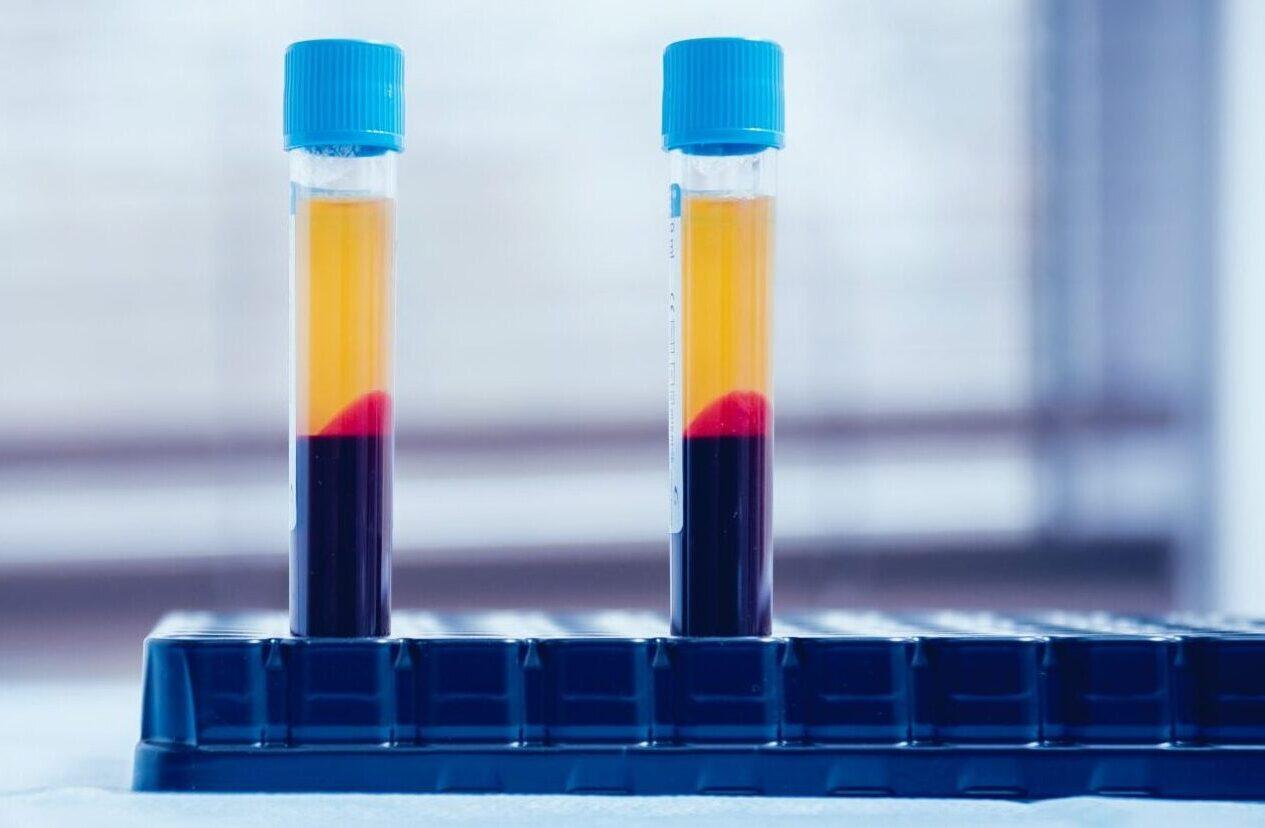
The blood that has been withdrawn is placed in a centrifuge, which is a machine that is going to be in charge of separating the platelets from the rest of the components. The plasma containing the platelets is separated in another tube, and factors that activate it (thrombin or calcium gluconate) are added to it so that they begin to form and release growth factors from the alpha granules. Later, this platelet concentrate is injected with small punctures into the skin of the area to be treated . Depending on the treatment and what you want, the injections will be more superficial, similar to mesotherapy, when it comes to facial rejuvenation or hair treatments, and deeper in case we are looking for a filling effect as in the treatment of scars.
What happens after the procedure?
After treatment, you may notice minimal swelling, redness, or bruising in the area, which can appear within 12 to 24 hours. After the application you can resume your normal life as no marks or scars will appear, says, Unlike other treatments, it is not necessary to rest either. If bruises appear, they may be visible for 3 to 4 days.
PRP results
The effects will be visible from the following 3 weeks, which is when the collagen that has been produced begins to mature and you can see that the skin becomes tighter and more radiant. You will notice an improvement in the texture and tone of your skin. Dr. García, a member of the Spanish Society of Cosmetic and Aesthetic Medicine points out “As a consequence, the treated skin appears more hydrated, firm, elastic, shiny, in short, younger.”
Complete collagen regeneration occurs 3 months after the procedure. Daily care with creams and sun protection, and the combination with other treatments such as laser or radiofrequency, can enhance these effects. A monthly session will be held for 3 – 4 months, after that, 1 to 2 annual maintenance sessions will be needed. “If we also combine PRP with hyaluronic acid, the correction of the loss of volume is total”,
Risks and possible side effects
The most common side effects are swelling and redness of the area, bruising can also be seen at the injection sites, lasting several days.
Although it is a simple technique, it carries certain risks such as the appearance of infections in the site that we have treated, allergic reactions (although this is very unlikely since we are using our blood), or pain in the injected area.
Frequent questions
- To whom should it not be done? In people with sepsis, cancer, blood diseases, acute or chronic infections, liver diseases, systemic or metabolic diseases, skin diseases, allergies, excessive consumption of alcohol or cigarettes.
- What are the advantages of this procedure? You have a lower risk of allergic reactions, as we use our platelets. It is ideal for people who do not want to use synthetic fillers. It can be used in combination with other treatments to further enhance its effects. It is equally effective in men and women.
- What should be avoided prior to the procedure? Smoking and alcohol can decrease the effects of plasma. It is advisable to avoid the use of non-steroidal anti-inflammatory drugs or cortisone for 1 to 2 weeks after the procedure, so the effect of the plasma does not diminish.
- How long does each session last? Approximately every session will last from an hour to an hour and a half, considering the time of cleaning, blood extraction, platelet separation, and product application.
- It is painful? Although you may feel slight discomfort from the injections, it is generally a painless procedure. If necessary, cream anesthesia can be used before performing it.
- How long do the effects last? You will begin to notice the improvement in the tone and texture of the skin 3 weeks later, and the long-term effects will be 3 months after the collagen has completed its maturation process.
- How many sessions are necessary? Usually, a monthly session is carried out for 3 months, although it will always depend on the objective of your treatment and the planning that you have done with your doctor.
- Can it be combined with other treatments? Platelet Rich Plasma has been proven in several studies to enhance the effects of various treatments, so it can be used in combination with microneedles, lasers, radiofrequency, or other light therapies such as LED lights.