2512007
Sexual identities are complex and resist simple or universal classification.
Although for a long time they were categorized only as heterosexuality and homosexuality, today different variants in the spectrum of sexual orientation are known and made visible.
Sexual orientation is the emotional, affective, and sexual attraction that a person feels towards other people of the same gender, different gender, or more than one gender.
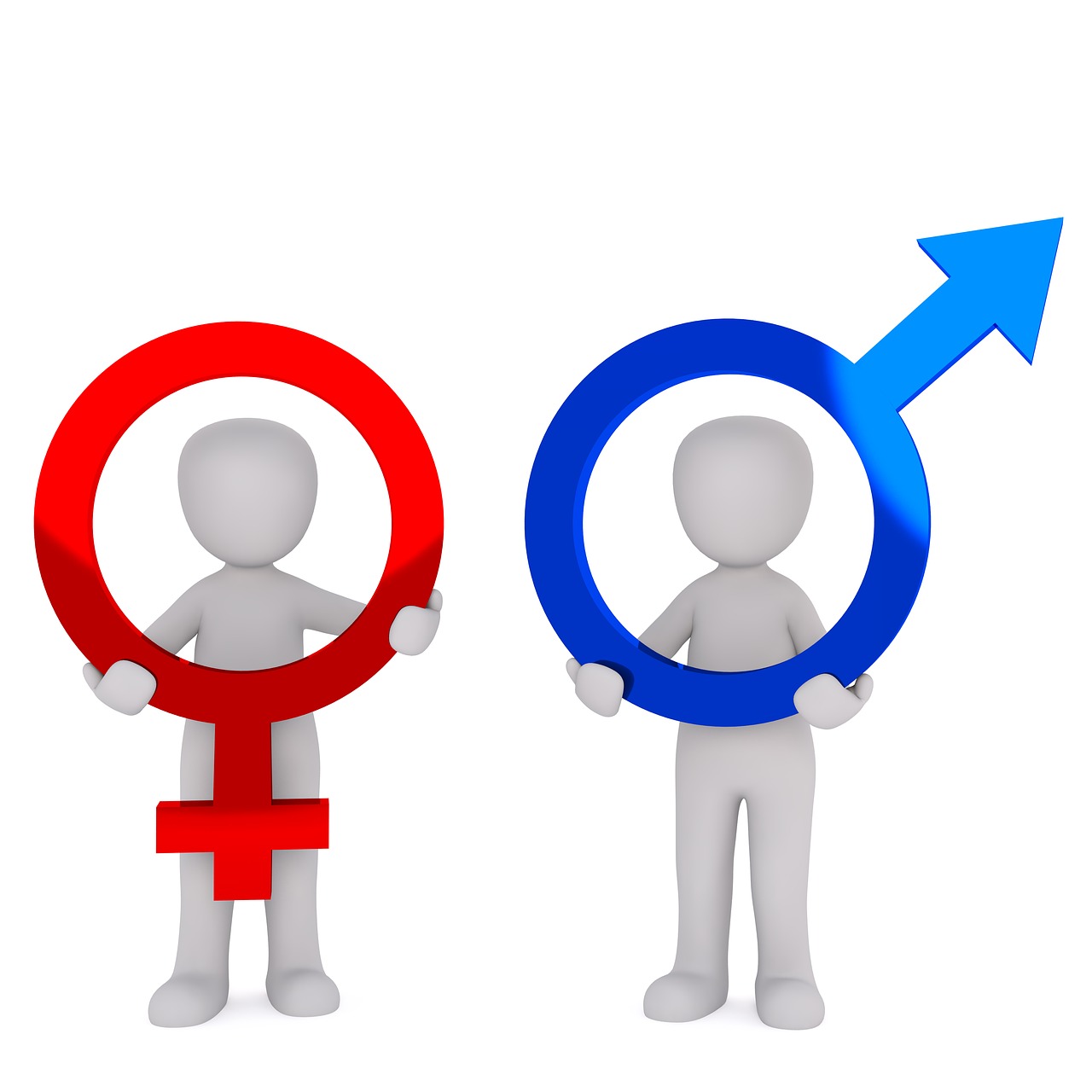
Gender refers to a set of socio-cultural constructions that determine the ways of being men or women in a specific time and culture. In other words, it is not the same to be a man or a woman at this time as in the past, or in one culture or country.
Instead, gender identity refers to the individual experience of gender as each person feels it. This may or may not correspond to the sex assigned at birth, including the personal experience of the body.
Returning to sexual orientation, it should be noted that it is not a fixed or singular entity. Currently, it is estimated that there are more than 200 scales that have been developed to define sexuality.
The best known of these is the proposal by Dr. Alfred Kinsey and his associates, who in 1948 published the following scale from zero to six:
Kinsey provided an additional category: X, which served to indicate that the individual was not sexually attractive.
Nearly 30 years later, psychiatrist Fritz Klein published the Klein Sexual Orientation Grid, a system used to describe a person’s sexual orientation with greater detail and complexity than the Kinsey scale. In it, people are asked to rate seven aspects:
To classify these aspects, values ranging from one to seven are used, with one being an attraction to another sex (heterosexuality) and seven being an attraction to the same sex (homosexuality). People are also asked to rate each of the aspects in three categories: past, present, and future.
In 1981, Michael Storms better incorporates asexuality and differentiates it from bisexuality.
As we pointed out, there are more than 200 scales to define sexuality, these models, which have been criticized and complemented over the years, serve to show a variety of ways of thinking about sexual orientation as something that occurs along a spectrum.
In the mid-1990s, the acronym LGBT emerged, made up of the initials of the words lesbian, gay, bisexual, and transgender.
Over the years, this acronym has evolved, including new initials or signs to include other communities, giving rise to the acronym LGBTQIAP+:
The L refers to lesbians, women who are physically, romantically, and/or emotionally attracted to other women.
The G refers to gays or homosexuals, those people (both men and women) who feel physical, romantic, and/or emotional attraction to people of the same sex.
The B stands for bisexuals (often shortened to “bi”), people who are physically, romantically, and/or emotionally attracted to both men and women.
The T stands for transgender (often shortened to “trans”), people who identify as a gender other than the one assigned at birth.
The Q refers to queer, people who consider that the definition of the other terms is limiting to describe who they are.
The I refers to intersexuals, people who do not have differentiated biological sex, either due to chromosomal patterns, reproductive organs, or other reasons. In the past, the term hermaphrodite was used, which is considered offensive.
The A refers to asexuals, people who do not feel sexual desire towards anyone. This does not necessarily mean that they do not feel romantic or emotional attraction, as well as sexual impulses.
Although asexual is the best known of the spec A identities, other identities fall within what is considered the romantic orientation.
Thus, for example, you can find aromantic ( Aromantic, in English), that is, someone who does not feel romantic attraction to anyone. There are also other subcategories derived from asexuality or aromanticism:
Clarification: the names of the different categories are presented in English together with approximations in Spanish. The latter are neither precise nor universal.
The P stands for pansexuals, people who are physically, romantically, and/or emotionally attracted to all people, regardless of their sex or gender identity. Unlike bisexuals, who can be attracted to men or women, pansexuals can be attracted to, for example, intersex or non-binary.
Cisgender refers to people whose gender identity matches that of the gender assigned at birth.
Non-binary refers to a person whose gender identity does not fit within the traditional binary gender structure (male/female).
Sources consulted: Gay and Lesbian Alliance Against Defamation (GLAAD), LGBT Foundation.
Creating a completely different series based on a universe that knows half the world can't… Read More
The strikes of scriptwriters and actors have put in check the constant flow of content to… Read More
Money Heist has returned to Netflix. This time as a prequel to the original series… Read More
One of the 50 best war films in cinema history turns 25 years old. And it is not… Read More
What is the singapore kiss In short, it is about emulating during intercourse, through the… Read More
Regarding patents, Sony is one of the technology companies that has carried out the most registrations in… Read More
